

Dining Table Buying Guide: Size, Shape, Materials, and Fit
A dining table is one of the few pieces of furniture that gets used hard: quick breakfasts, homework, weekend hotpot, holiday meals, late-night chats. A smart dining table buying guide starts with real-life use, then works backward into size, shape, materials, and build details. Get those right, and the table will feel “easy” every day—no squeezed elbows, no chair legs catching, no finish that shows every fingerprint.
Before diving into styles and finishes, it helps to treat the table like a small floor plan project. The best-looking option can still be the wrong one if it blocks walkways or can’t handle the way people actually eat at home.
1) Measure the room like a planner, not like a shopper
A dining table should leave enough “working space” for chairs to slide out and for people to walk behind seated diners. Most layout problems come from underestimating clearance.
The clearance rules that prevent daily frustration
Use these practical spacing targets:
-
Minimum clearance behind chairs: 36 in (90 cm)
-
Comfortable clearance for busy paths or open-plan rooms: 42–48 in (105–120 cm)
-
Table space per person: about 24 in (60 cm) of edge length
-
Tight but workable for everyday family meals: 22 in (55 cm) per person
Measure your dining zone (not the whole room), then mark a “no-go border” around the edges using painter’s tape.
A simple measuring process that works in real homes
-
Measure the usable length and width of the dining area (exclude built-in cabinets, radiators, or swing areas for doors).
-
Subtract clearance from each side where people must pass.
-
The remaining rectangle is your maximum table footprint.
-
Check chair pull-out: allow another 10–12 in (25–30 cm) behind the chair for a comfortable sit-down motion.
A common scenario: a beautiful table fits the room on paper, but once chairs are occupied, nobody can get to the kitchen without turning sideways. Tape on the floor catches these issues fast.
2) Choose a table shape that matches traffic flow
Once you know the footprint, shape becomes less about taste and more about how people move.
Rectangular dining tables: best for flexible seating
Rectangular tables usually seat the most people for the same footprint. They’re the go-to for long rooms and open layouts because chairs line up efficiently. If hosting happens often, this shape makes it easy to add an extra chair at the end.
Round dining tables: better conversation, less corner-bumping
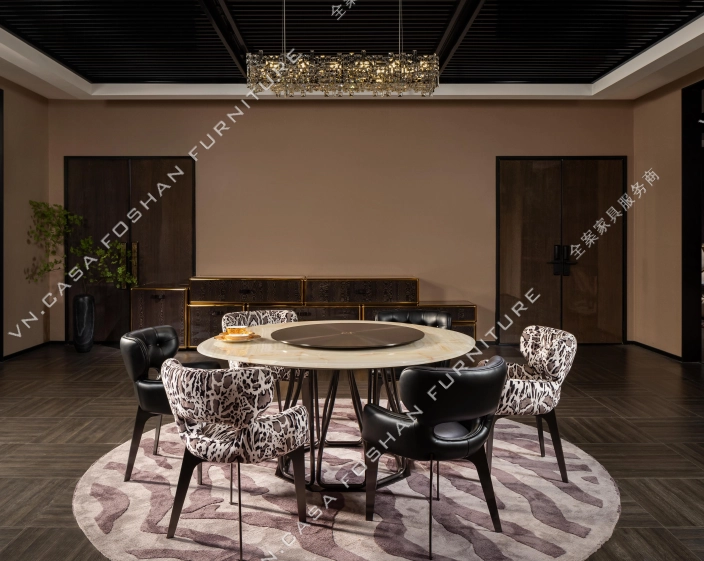
Round tables are great in smaller or square rooms because there are no sharp corners and everyone can see each other. They also feel lighter in tight spaces. The tradeoff is that very large round tables become “reachy” in the center—shared dishes end up far away.
Oval dining tables: the compromise shape
Oval tables keep the “soft” circulation of a round table but give more usable edge length like a rectangle. They’re especially helpful when the dining zone sits inside a walkway because rounded ends reduce hip-bumps.
Square dining tables: only when the room truly supports it
Square tables look balanced in square rooms and work well for four. For six or more, they can feel bulky, and the center becomes hard to access.
3) Pick the right dining table size for how people actually eat
A table that “seats eight” on a product tag may only seat eight if everyone is using narrow chairs and eating elbow-to-elbow. It’s better to size for everyday comfort and have a plan for guests (such as extension leaves).
A helpful way to decide is to define two numbers:
-
Everyday seating (most meals)
-
Peak seating (holidays, birthdays, visitors)
Dining table size guide by shape and seating
| Seating | Rectangular (L x W) | Round (Diameter) | Oval (Approx. L x W) |
|---|---|---|---|
| 4 people | 48–54 in x 30–36 in | 36–44 in | 54–60 in x 36 in |
| 6 people | 60–72 in x 36–40 in | 48–54 in | 72 in x 36–40 in |
| 8 people | 78–96 in x 36–40 in | 60–72 in | 84–96 in x 40 in |
| 10 people | 96–120 in x 40–44 in | 72 in+ (often too large) | 108–120 in x 44 in |
A practical note: table width matters as much as length. Too narrow, and shared dishes don’t fit; too wide, and conversation across the table feels distant. For many households, 36–40 inches is the “sweet spot.”
Materials: choose based on maintenance, not just looks
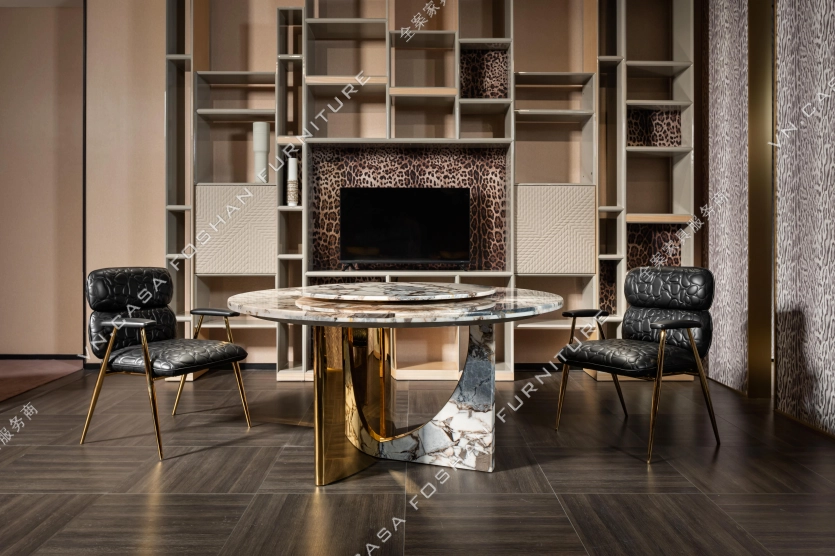
Materials decide how the table will age. The right surface depends on your daily habits: kids’ art projects, hot pots, frequent hosting, or a minimalist “always tidy” home.
Before choosing, think about what will touch the table:
-
Hot cookware?
-
School bags and laptop edges?
-
Wine, coffee, citrus?
-
Heavy centerpiece objects?
Material comparison for real-life use
| Material | What it’s great for | Watch-outs | Best fit households |
|---|---|---|---|
| Solid wood | Warm feel, can be refinished, ages beautifully | Can dent/scratch, needs humidity care | Long-term homes, “keep it forever” buyers |
| Wood veneer | Stable, clean look, often more budget-friendly | Needs good edge sealing; avoid standing water | Modern homes, design-led projects |
| Stone / sintered stone | Heat and stain resistance, luxury look | Heavy; base strength matters; edge chips possible | Frequent hosting, “hot pot” and shared dishes |
| Glass | Visually light, easy to wipe | Smudges, noise, shows clutter | Small spaces where lightness matters |
| Metal accents | Strong, modern, durable base options | Cold feel; finish can show scratches | Industrial or contemporary interiors |
If daily life is messy (kids, pets, lots of guests), prioritize a surface that wipes clean quickly and doesn’t punish small accidents.
5) Don’t ignore the base: leg placement changes comfort
People notice the tabletop first, but the base decides whether chairs fit comfortably.
Common base types and how they behave
-
Four-leg corners: stable, classic, but can block chairs on the corners.
-
Trestle base: good knee room along the sides; check end seating space.
-
Pedestal base: excellent for flexible seating (no corner legs), but needs a heavy, well-built base to avoid wobble.
-
Double pedestal: ideal for long tables; supports weight evenly.
A quick test: count how many seats you want on each side, then confirm leg placement won’t force chairs to sit “between legs.”
6) Match table height to chairs and daily routines
Most dining tables are around 29–30 in (74–76 cm) high. The comfort comes from the gap between seat and tabletop.
Target spacing:
-
10–12 in (25–30 cm) from chair seat to tabletop underside
-
If chairs have armrests, check they slide under the apron (or choose an apron-free design).
In real homes, chair choice often comes later. That’s when problems appear: armchairs that don’t fit, seats that feel too low, or legs that knock into the table base. Planning the chair style early avoids returns and redesigns.
7) A quality checklist that separates “nice” from “lasting”
A dining table takes more abuse than a console or coffee table. Build details matter.
What to check before placing an order
-
Top stability: no flex or “drum” feel when pressed
-
Edge and corner finishing: smooth, consistent, no sharp transitions
-
Joinery and base structure: tight joints, strong bracing, no wobble
-
Veneer work (if used): clean seams, consistent grain direction, sealed edges
-
Stone tops: secure mounting method, reinforced corners, protected edges
-
Packaging: corner protection, foam density, and moisture-resistant wrapping for long-distance shipping
A simple scenario: a large stone-look tabletop can be beautiful, but if the base is underbuilt, the table will feel shaky every time someone leans in. For bigger tops, base engineering is not optional.
8) When an extendable dining table makes more sense
Many homes need a table that does two jobs: compact during the week, larger on weekends. That’s where extension designs win.
Look for:
-
A smooth leaf mechanism that one person can operate
-
Stable locking when extended (no “center sag”)
-
A finish that stays consistent between main top and leaves
-
Storage plan for leaves if they’re removable
Extendable tables are especially useful for apartment dining zones, multi-purpose spaces, and homes that host only a few times per month.
Supplier Note: How VN CASA Foshan Furniture Supports Dining Projects
Many buyers plan a full dining room. These people may be homeowners who work with designers. Some are developers who set up model units. Others are project teams that buy lots of items at once. For them, the supplier’s ability matters just as much as the dining table itself.
VN CASA Foshan Furniture is a partner based in Foshan. It helps people find furniture. The company links clients straight to trusted manufacturers. This cuts extra steps in between. But it still checks the quality carefully. Their service focuses on personal help. They offer a dedicated designer or stylist plan. They also handle everything from start to finish for bigger furnishing jobs. Their case center proves they have handled many home projects. These projects cover all kinds of interior styles. This helps a lot when the dining table must match the whole room idea instead of just being by itself.
Conclusión
Buying a dining table is all about fit. It must fit the room size. It should fit how people move around. And it needs to fit daily meals too. First, check the measurements and leave enough space. Next, pick a shape that works with how people walk. Then, follow the rules for size and seats so no one bumps elbows. Last, choose materials and how it is built to match real life. Think about cleaning spills, having guests, hot dishes, kids playing, and long use. Once these basic things are good, the table is no longer just something you buy. It becomes the simplest part of the whole room.
Preguntas frecuentes
What is the best dining table size for a small dining area?
In a small room, put clearance first. Make sure you have at least 36 inches behind each chair. After that, go for a round or oval table. This helps with walkways. Many small dining spots do great with a 36 to 44 inch round table for four people. Or try a slim rectangular one about 48 to 60 inches long.
Is a round dining table better than a rectangular one?
A round table works well in square rooms. It also makes talking easier since everyone looks at each other. A rectangular table can seat more folks. It fits better in long rooms too. Pick the one that matches your room shape. Also think about how often you need more seats.
Which dining table material is easiest to maintain?
Stone tops or good sealed surfaces are easy to clean every day. They deal with heat and stains nicely. Finished wood and strong veneers work too if you clean spills fast. The easiest choice for less worry is the one that fits how your family lives.
Should an extendable dining table be the default choice for families?
If you need fewer seats every day but more on holidays, an extendable table is a smart pick for saving space. The main thing is to choose a steady way to extend it. Also, make sure the base stays steady and does not shake when it is all the way open.


