


How to Choose a Bedroom Dresser That Works Every Day
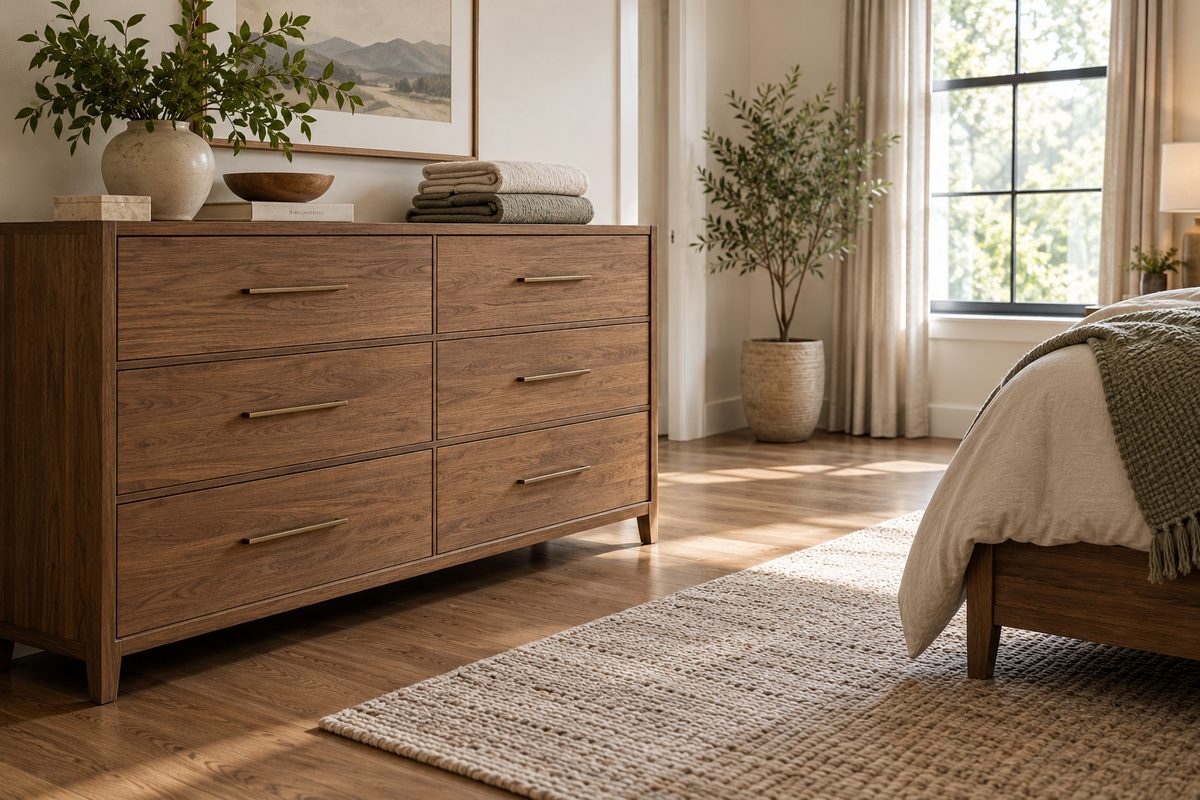
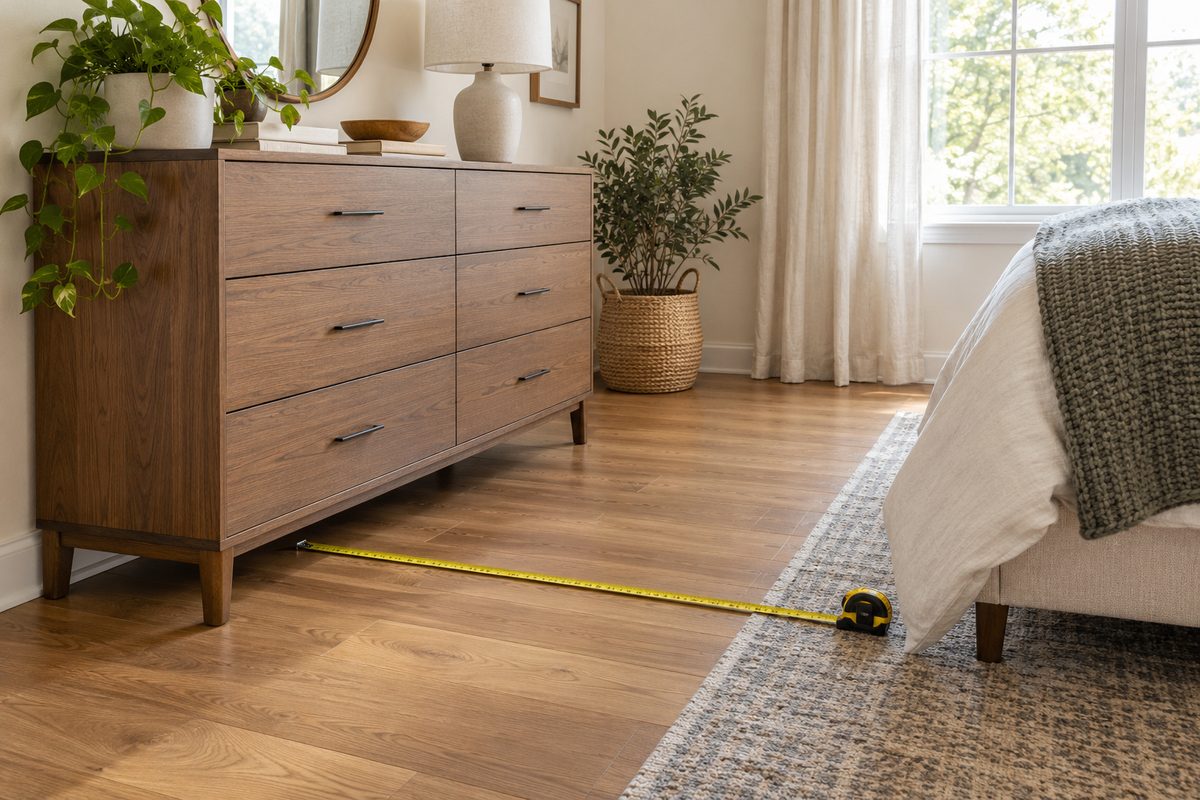
A dresser may fit the empty space beside a bed and still be awkward to use. Pull out the bottom drawer on the room plan. There must be space for the person opening it as well as the drawer itself.
The answer may be a small dresser, a tall chest or no extra cabinet at all. Start by deciding which folded clothes will actually live there. The wardrobe might already handle most of them.
Give the Drawers a Job
Start with the clothing that has no place in the wardrobe. Put a group beside each proposed drawer: socks, shirts or bulky linen. The exercise often shows that one box is unnecessary, while another needs to be wider or shallower.
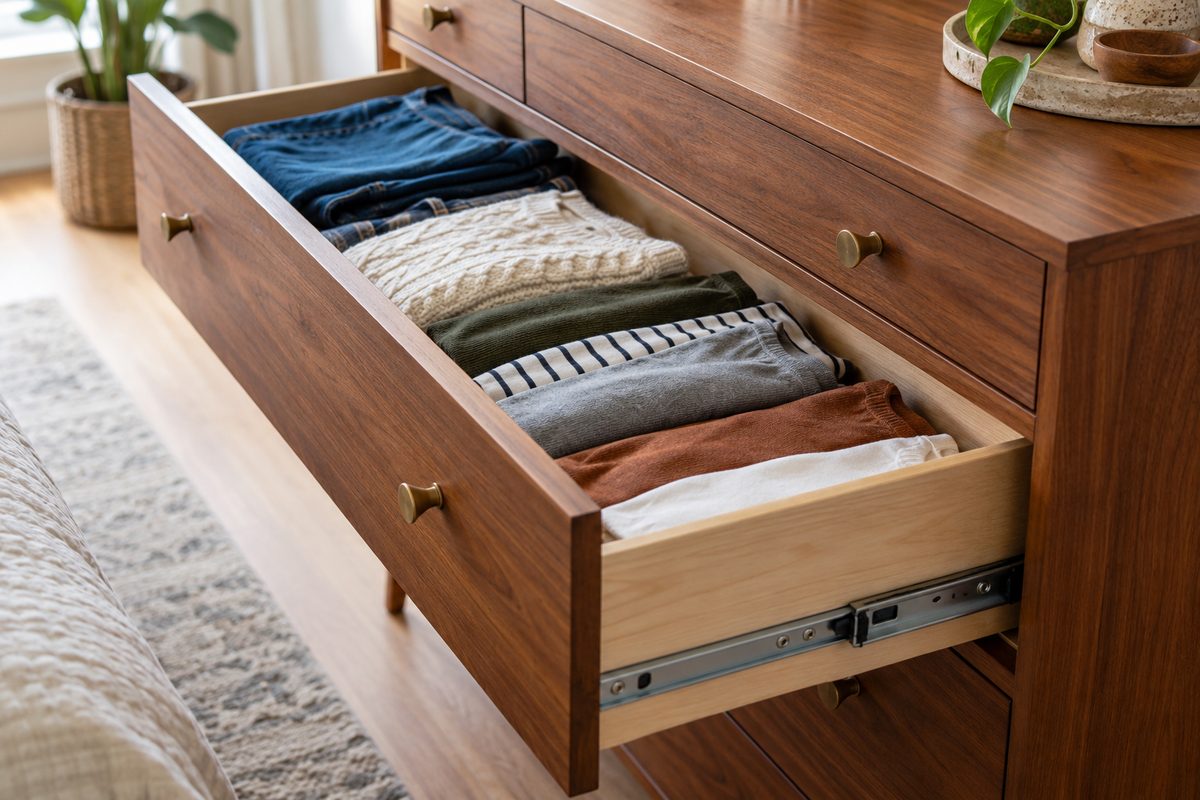
Ask for the clear dimensions of the drawer box and pull it fully forward. Can you reach its back, or does part of the box remain under the top? That difference can matter more than one extra drawer on the sales label. The outside width includes runners and cabinet panels, which do nothing for storage capacity.
A drawer can also be the right size and still be frustrating to share. If two people use the bedroom, note whose clothes belong in each part of the dresser. The top drawer should not require one person to reach across the other’s side of the bed every morning. This is another reason to test the piece in the actual layout rather than judging it in an empty showroom.
Write the purpose next to each drawer you’re thinking of. Any drawer without a job is a reason to rethink the dresser’s size. In a guest room, reserve a place for luggage before using the last stretch of wall for storage.
Draw the Open Drawer on the Plan
A bedroom drawing is easiest to read with the drawer open. Sketch the bed, the cabinet and a person standing at its front. Add the door swing. If the shapes overlap, test another wall before cutting down the drawer depth.
A tall chest occupies less wall but asks the user to reach higher. A low dresser uses more wall and gives the room a practical top. Check the users’ reach. Moving the dresser to another wall may work better than buying a shallower one with poor storage.
|
Situation |
Arrangement to Test |
Question on the Plan |
|
Long wall and limited closet |
Wide, low dresser |
Can a person stand at an open drawer? |
|
Short wall with clear height |
Taller chest |
Can all users reach the upper drawers? |
|
Narrow route beside the bed |
Relocated or shallower piece |
Does the route remain usable? |
|
Guest room |
Small mixed-depth dresser |
Is luggage space still available? |
The whole-home furniture checklist includes a dresser as a possible bedroom piece. Its position depends on the door swing, curtains, sockets and mirror. Draw all four on the room plan before choosing its wall.
Feel What the Drawer Does
Open a showroom sample slowly, then at a normal pace. Does it scrape a neighboring front? Is it level when pulled out? Try reaching the back. If it is hard in the showroom, it will be hard at home.
Watch a sample drawer from the side as someone pulls it to its stop. Does the box tilt or rub against the neighboring front? Check how its sides meet and what holds up the bottom. The furniture QC guide groups checks under size, function and finish; use those headings to record what you saw. A photograph of a closed front cannot show a sticking runner. Compare the surface with the finish sample, too.
Try the handles, too. Check whether the intended user can reach the highest drawers. Feel if a projecting knob catches on clothes as someone walks by. For a linen drawer, ask for the runner’s load capacity instead of accepting “heavy duty” without proof.
Settle Stability and Finish
Get the installation sheet while you’re still choosing the model. The wall and floor affect how it’s fixed and leveled. The US Consumer Product Safety Commission urges wall anchoring for dressers. Match the supplied restraint to the wall and name the person who will fit it. Cabinet weight is not a substitute.
A mirror above the dresser requires its own support. Don’t assume the top can hold it safely. This is easier to check on the room plan than after it’s delivered.
The top drawers will be used every day. Take the finish sample into the bedroom. Set the sample beside the bed and wardrobe finishes in the actual room. Record its material and code if matching matters. Ask for the care method. The furniture product range can suggest a style, but approve this dresser’s finish on its own sample.
Check the Route to the Bedroom
Get the packed size and follow the route from entrance to bedroom. A cabinet can fit its wall yet fail a lift turn once it is inside a carton. Use the carton size at stair turns and doors. A sectional delivery also needs an assembly arrangement.
Run the drawers before discarding their cartons. Check the surface, handles and fixing parts against the approval. Record damage under the item number while the shipment label is at hand.
About JuHaus
JuHaus, based in Foshan, supplies mid-to-high-end furniture for residential projects. Its designer service asks for a room plan and leads to product references, dimension layouts and a furniture list before shipment checks. For someone specifying a dresser, those steps offer a way to show a client why the piece fits this bedroom and which finish and drawer arrangement were agreed.
Conclusion
The choice is settled when the planned clothes fit and a person can use the open drawers without blocking the room. Keep the finish sample and fixing instructions with that drawing.
For a bedroom furniture project, send JuHaus the room plan, wardrobe layout and intended drawer contents through the contact page. The proposed cabinet can then be considered against the actual room.
Questions fréquentes
Which shape leaves more usable space beside the bed?
Draw both options with a drawer pulled out. A chest frees wall space, while the top drawers may be beyond an easy reach.
Which drawer measurements matter most?
Ask for clear internal dimensions and drawer extension. The front size alone doesn’t tell you how much fits.
Do the bed and dresser finishes have to match?
No. A similar tone or repeated detail may be enough. For a close match, approve the physical samples together.
Does a heavy dresser need anchoring?
Use the instructions and restraint for the actual model and wall. Weight alone is no proof that the dresser cannot tip.
What should be checked at delivery?
Check size, finish, drawer movement, hardware and instructions against the approved record. Take photos of damage while the shipment number is clear.


