

Best Furniture for Humid Climates: Stop Mold and Musty Odors
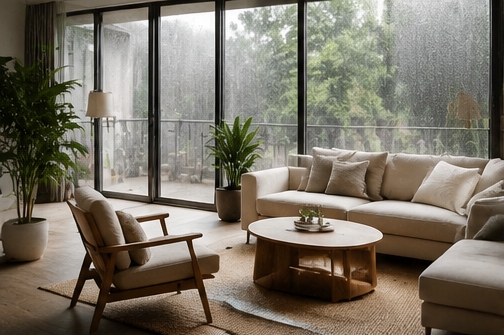
A home in a tropical, coastal, or rainy area needs more from its furniture than a dry place does. High moisture moves into wood, cloth, foam, joints, and closed storage spaces. Drawers can stick. Thin wood layers can lift. Metal parts can rust. Soft seats can start to smell stale. Picking furniture for damp zones starts with more than looks. The materials, surface coats, air flow, build quality, and how easy it is to clean all decide how well a piece lasts over time.
The best furniture for wet weather is not always fully waterproof. What counts is whether it can handle repeated wet and dry changes. It should dry out fast. It should also stay simple to check and clean.
Why Humidity Causes Mold, Odor, and Furniture Damage
The effect of damp air damage occurs gradually in furniture items. The wood material takes in or releases water from the air. Over time, too much moisture causes swelling of the wood. This leads to stress on the joints or surface finishes. There is another problem posed by the soft furniture items. Cushions and cloth layers retain moisture in areas where there is little air circulation.
Check for moisture in the back portion of sofas, underside of beds, inside cabinets, cushion stitching and corners next to outer walls. Warning signs include:
- drawers or doors that suddenly feel tight
- cloudy finishes, peeling edges, or swollen panels
- dark spots on cloth, wood, or nearby walls
- cushions that stay cool or damp
- a smell that comes back soon after cleaning
Keeping indoor relative humidity under 60 percent helps limit conditions that favor mold. The ideal range sits around 30 to 50 percent. Furniture also gains from air movement. Do not press pieces tightly against a damp wall.
Best Furniture Materials for Humid Areas
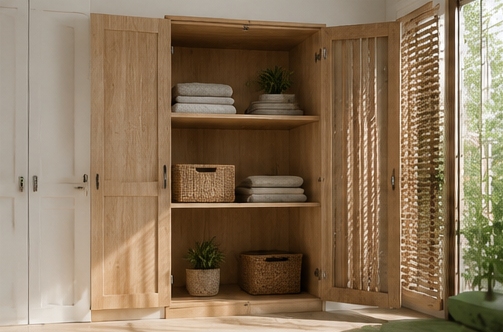
No material is ideal for all rooms. The table, couch, wardrobe, and chair will have to contend with varying levels of moisture exposure. Moisture resistant furniture involves the combination of proper core materials, moisture resistant surfaces, solid joints, proper hardware, and good ventilation.
Solid Wood for Humid Conditions
For wood furniture in damp climate settings, dense hardwoods with solid shape stability are usually safer than untreated wood that reacts strongly to moisture. Teak sees wide use where moisture resistance counts. Its natural oils help it handle damp conditions. Other hardwoods can also work well when they are properly dried, built, and finished.
Surface finish coverage matters a lot. Exposed end grain, raw undersides, weak joints, and unfinished edges let moisture enter in uneven ways. Ask if all faces are finished. Also ask what care the piece needs during rainy seasons.
Engineered Wood Without the Guesswork
MDF, particleboard, and plywood should not be treated as one single material. Standard boards can swell after long moisture exposure. Moisture-resistant grades and well-made plywood suit humid indoor spaces better. Edge sealing is key because moisture can enter through open cut edges.
For kitchens, vanities, wardrobes, or built-in units, ask for the board grade, edge treatment, backing material, and intended use. Do not rely on a vague “waterproof” claim.
Metal, Rattan, and Low-Absorption Surfaces
Powder-coated aluminum, stainless steel, and quality synthetic rattan can work well in coastal homes and covered outdoor areas. These materials soak up little moisture. Ordinary steel may rust if a coating chips.
|
Furniture area |
Practical material direction |
Main detail to check |
|
Living/dining |
Stable hardwood, sealed plywood, coated metal |
Finish and joints |
|
Спальня |
Finished wood, ventilated panels, raised frames |
Airflow |
|
Kitchen/vanity |
Moisture-resistant board or plywood |
Sealed edges |
|
Covered outdoor |
Aluminum, stainless steel, synthetic rattan |
Corrosion and drainage |
|
Upholstery |
Breathable or performance fabric |
Drying access |
How to Choose a Sofa for Humid Weather
A sofa for damp weather needs closer checks than a table. Moisture can hide under the surface you see. A moisture-resistant sofa should be viewed as a full system. The cloth, cushion filling, inner frame, base, and space above the floor all play a role.
Fabric and Cushion Construction
Very thick, absorbent covers can dry slowly in a humid room. Look for strong, easy-to-clean upholstery that fits the setting. Removable cushion covers make inspection and drying simpler. Quick-drying cushion structures help where humidity stays high.
Check the sofa base, rear panel, inner frame, and cushion build. Do not block the underside with stored boxes. Leave space behind large soft pieces. The same rule applies to padded beds next to cool outer walls.
Furniture Design Features That Help Prevent Mold
Mold-resistant furniture is less about a special label. It is more about cutting places where moisture stays trapped. Raised legs, open backs, easy-to-reach undersides, removable soft parts, and simple surfaces make care easier.
Airflow Is Part of the Design
When you can, keep larger furniture about 5 cm away from walls. Beds, wardrobes, and sofas pushed flat against an outer wall can form a still pocket. That pocket stays cooler and damper than the rest of the room. Tokyo public-health advice specifically says to leave at least 5 cm between furniture and walls. This improves air flow and lowers mold risk.
Raised furniture also makes leaks, condensation, or early mold easier to spot. A custom wardrobe built tightly into a damp corner with no air gap can cause trouble even when the material itself is good.
How to Prevent Mold on Furniture and Remove Musty Smells
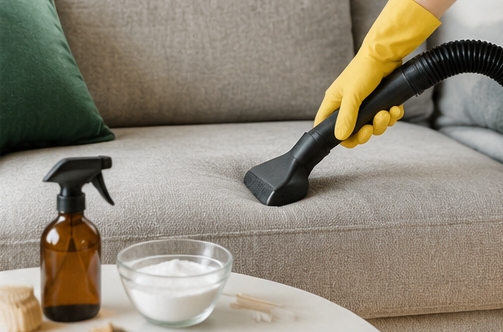
Even strong furniture for tropical homes needs basic care of the room environment. A simple humidity meter shows if excess moisture is occasional or constant. Air conditioning, exhaust fans, opening windows when outdoor air is drier, and dehumidifiers can all help control moisture levels.
For everyday prevention:
- dry spills and wet fabrics right away
- vacuum sofas, seams, and cushion gaps
- avoid packing wardrobes completely full
- open cabinet doors during long wet periods
- clean dust behind large furniture
- check plumbing or windows if one area stays damp
To remove the musty smell from your furniture, first find out where the moisture comes from. Make sure the furniture and its surroundings are dry. Clean based on what kind of material your furniture is made of. The application of perfumes on damp furniture should be avoided. In case the smell stays, professional cleaning or buying new furniture will be required because the fungus grows deeper in the foam or other porous materials.
Choose Furniture for the Climate, Not Just the Showroom
Выбор мебели for Humid Climate Conditions becomes easy if you start from the room. Corrosion-resistant hardware is needed for a coastal apartment. Breathable upholstery and properly finished wood must be chosen for a tropical climate. An out-of-town holiday house needs easily accessible furniture, without too many decorations and small details.
If you plan a full-house project, consult a good furniture manufacturer to consider all these aspects including room size, usage, climate, location, materials, finishes and shipment. Even the best furniture for humid climate could perform poorly if its size hinders air circulation or its finishes are unsuitable to the room.
About Juhaus
Juhaus, former VN CASA, is a Foshan-based mid and high-quality furniture manufacturer offering residential whole-house projects. The range of works includes interior designing, loose furniture, custom cabinets, selected building and interior materials, procurement, quality controlling, consolidation of shipping, installation consultancy and post-sale service. Projects may start from floor-planning, and go through product choosing, manufacturing, testing, international delivery.
Thanks to 20 years of exporting experience and over 160 cooperative factories, Juhaus operates in more than 100 countries worldwide providing residential whole-house projects. Besides, being located in Foshan makes Juhaus familiar with furniture, furnishing and building material supply chain. For buyers looking for a furniture factory for humid climate needs, the useful starting point is a clear specification. That specification should cover climate, room conditions, materials, dimensions, finish, and maintenance.
Вывод
Choosing furniture for humid areas comes down to how materials handle moisture, how air moves around the pieces, and how the items are built. Select stable, properly finished materials. Inspect hidden parts of sofas and beds. Give large pieces breathing room. Control indoor humidity before mold or odor takes hold. Good furniture for humid climate conditions should fit both the home and the environment where it will be used.
Часто задаваемые вопросы
What would be the best furniture for humid conditions?
For furniture in humid conditions, the appropriate type of furniture will be that which is resistant to moisture, has the right finish, hardware, and structural construction for air circulation. The appropriate type of furniture will include hardwood, engineered wood, aluminum, stainless steel, and synthetic rattan.
How do I prevent my furniture from molds?
In order to prevent my furniture from molds, the following steps need to be undertaken; ensuring that the humidity level is kept below 60%, ensuring there is proper ventilation and maintaining some distance behind large furniture pieces.
How do I get rid of musty odor from the furniture?
One needs to locate the cause of moisture presence first and eliminate it. Then, the furniture should be dried properly and cleaned with a technique that is proper for its material.


