

How to Choose Furniture for a Children’s Room
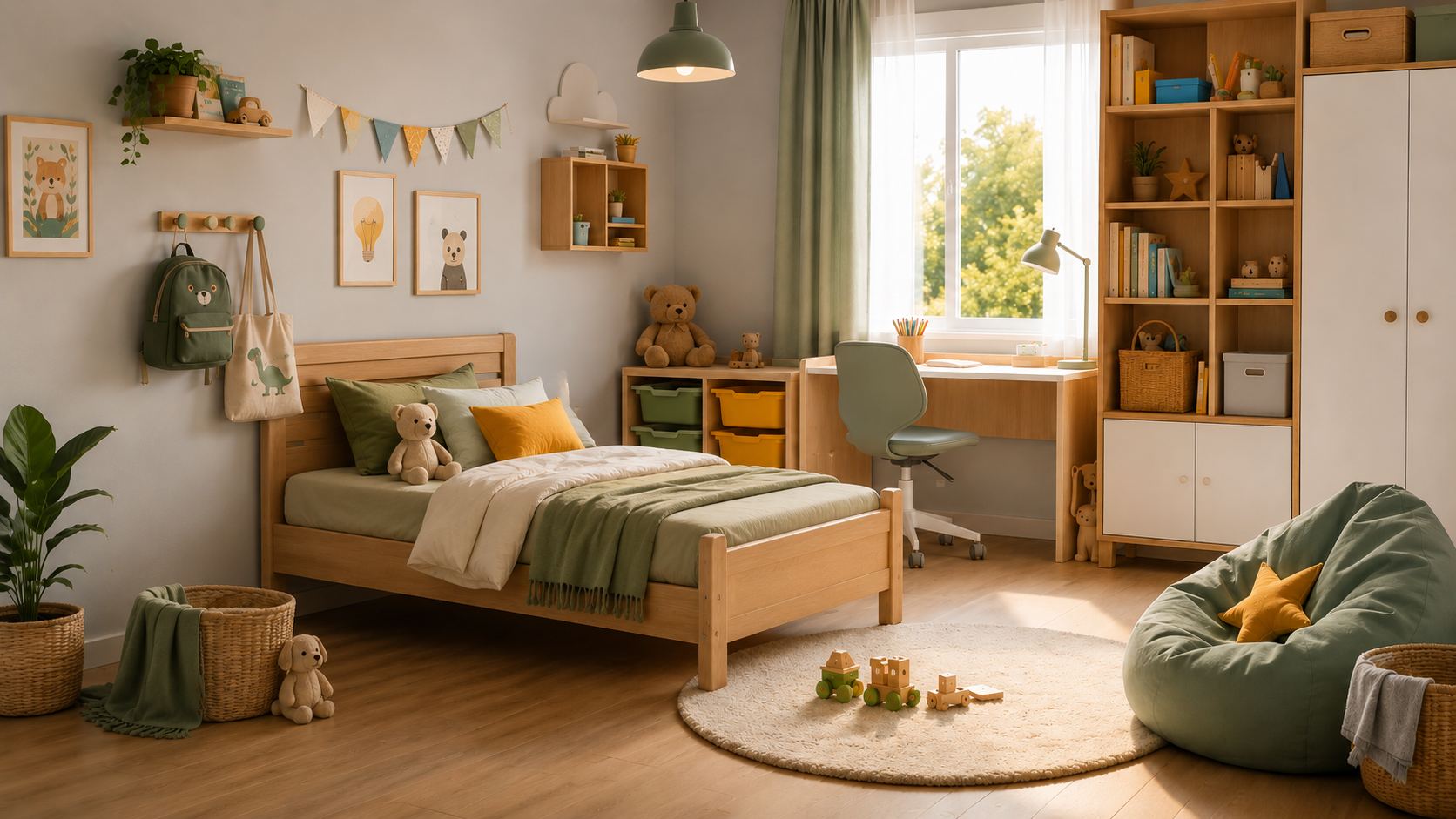
A child’s bedroom supports sleep, dressing, reading, study, play, and storage. Good children’s room furniture allows all these activities within the available space without cramping the room. The furniture must be comfortable for the present but durable enough for future growth.
The task is not merely purchasing furniture that forms an attractive kid’s room furniture set. Safety, proportionality, storage, durability, and aesthetics are as important as color coordination.
Start With the Room, Not the Catalog
Before considering the available furniture choices for the children’s bedroom, first plan the interior of the room. This means measuring the dimensions of the walls, ceiling, windows, electrical outlets, and space required to open the door and drawers. It will help keep the room functional despite buying nice furniture.
Create Clear Activity Zones
Most children’s rooms work better when they have simple areas for sleeping, study, storage, and play. A rug can mark the play area. A desk near a window forms a natural study corner.
| Zone | Useful Furniture | Key Detail |
|---|---|---|
| Sleep | Bed, bedside table | Keep a clear route to the door |
| Study | Kids study desk, chair | Use daylight without screen glare |
| التخزين | Wardrobe, drawers, shelves | Keep daily items within reach |
| Play | Open floor, toy storage | Avoid loose cables and sharp corners |
A good sized bed, a space for storage, and a study table would usually be the best and most essential furniture to have in a kid’s bedroom. Children require plenty of space to play about and extra furniture may hinder that space.
Put Safety Ahead of Style
Safety for children’s furniture is about more than round edges. Issues of stability, hardware, finish, assembly, and positioning are important too. Children can pull out drawers, climb on shelves, and lean on desks. This is natural behavior, so the furniture needs to cope with it.
Check Stability and Fixings
Tall wardrobes, bookshelves, and drawers should be fixed firmly to prevent them from falling over. Heavier objects should be placed in low-level shelves. It is advised not to place children’s toys in tall cupboards.
Check for these points:
-
smooth edges in busy walking areas
-
firm joints that do not rock
-
safe drawer stops and simple handles
-
secure bed slats with no trapping gaps
As regards bunk beds, be sure to adhere to the recommended ages and mattress restrictions. The upper bunk is meant for kids older than six years. The guardrails should always be placed at the appropriate height above the mattress.
Review Finishes and Upholstery
In the case of kids’ wooden furniture, inquire about paint, lacquer, glue, and boards used. Surfaces must be smooth and cleanable. In addition, they should have no strong smell. Removable covers are useful in snack, crafting, and drawing rooms.
Very pale upholstery shows stains quickly. Mid-tone, textured fabric is often more practical for a reading chair or upholstered bed. It hides everyday marks better and still looks pleasant.
Choose Furniture for the Child’s Age
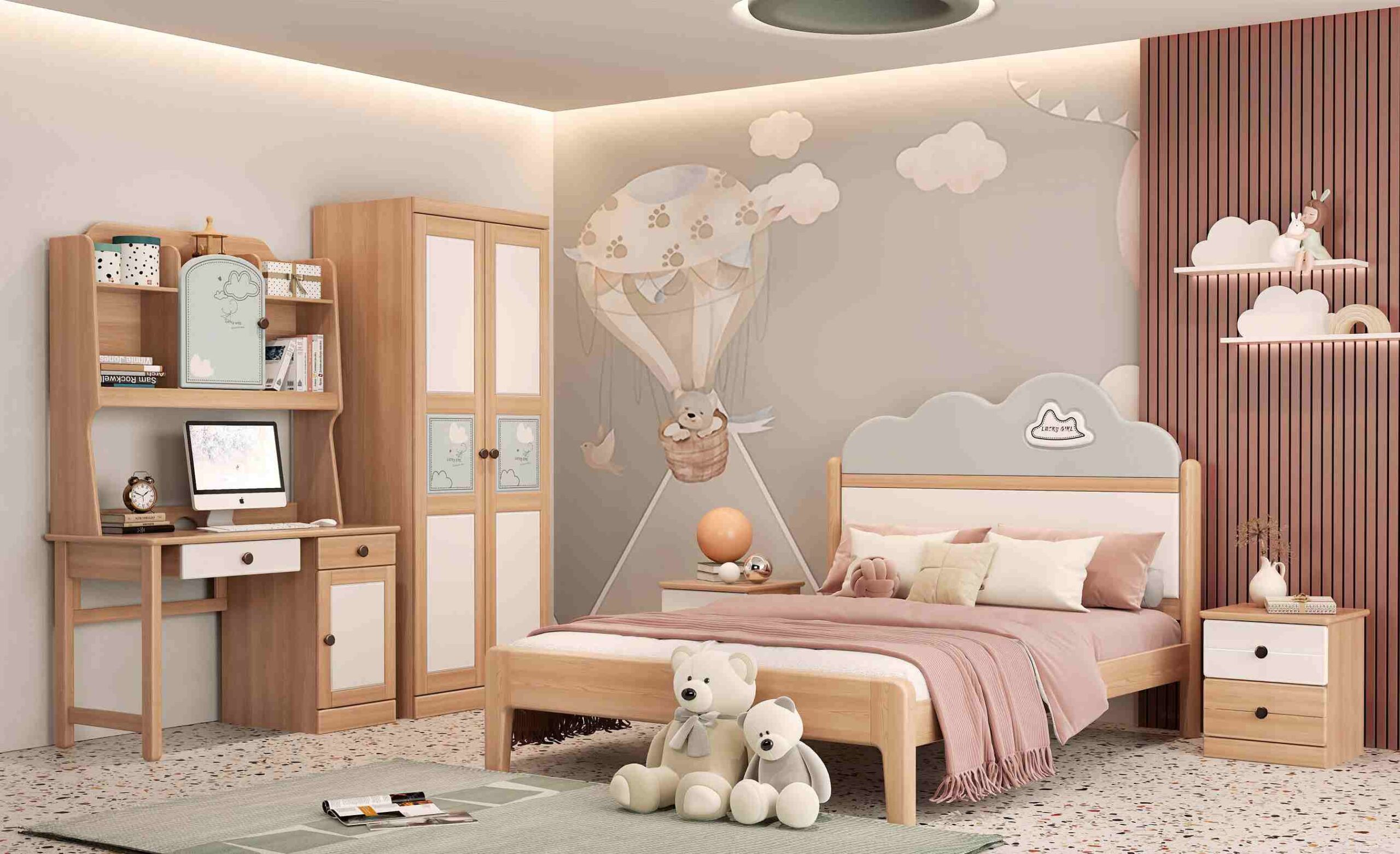
Furniture for children should be appropriate to the height, activity, and needs of the child. While larger furniture would last longer, it could prove cumbersome when used at an early age. Appropriate furniture will give the child a sense of empowerment and independence.
Match Furniture to Each Stage
For toddlers and preschoolers, low shelves and drawers support independence. A child can choose a book, return toys, or reach everyday clothes without climbing. A low-profile bed also makes access easier and safer.
For primary-school children, the study area becomes more important. A kids study desk needs enough depth for a book, notebook, and lamp. The chair should let the feet rest on the floor or a support. Elbows should sit close to desk height. This setup reduces strain during homework.
For older children, flexible pieces offer better value:
-
an adjustable chair
-
a wardrobe with movable shelves
-
neutral storage that suits a teenage room
-
a desk wide enough for schoolwork and a computer
Use bedding, curtains, rugs, and art for color. These items are easier to change than a bed or wardrobe. They let the room grow with the child without a full furniture swap.
Plan Storage Around Real Belongings
Children’s storage furniture should suit the objects that the child has. Books, toys, sports equipment, paperwork from school, and clothing all require different types of storage facilities. It is important to look at the actual objects before the containers.
Combine Open and Closed Storage
Low open shelves suit favorite books and toys used every day. Closed drawers and cabinets hide visual clutter. They also make the room calmer at bedtime. A useful mix might include open shelves, a shallow craft drawer, and a cabinet for less-used toys.
Labels with words or pictures help younger children put items away. Avoid making every container deep. Small pieces disappear at the bottom. Shallow drawers and removable baskets make sorting easier. Children can see what they have and put things back without frustration.
Under-bed drawers need room to open fully. Measure the gap to the opposite wall before choosing this kind of space-saving kids furniture. If the space is tight, the drawers will stay unused.
Select Materials for Daily Use
There is no one-size-fits-all perfect material for children’s bedroom furniture. For example, hardwood is durable and can be refinished; however, panels can provide uniformity of surface. High-quality engineered boards can be appropriate for use in making desks and cabinets provided their edges are good.
Judge the Whole Construction
Material names alone do not show quality. Check panel thickness, frame strength, drawer movement, shelf supports, edge sealing, and back-panel attachment. A strong frame and smooth drawers matter more than a fancy label.
Purchase furniture that can resist scratches and is easily cleaned. Buy beds that are made of sturdy frames and slats along with joints that do not make noise. Purchase furniture that has upholstery that can be removed or replaced as well. This will ensure that the room is always clean and tidy.
Choose Three Core Furniture Pieces
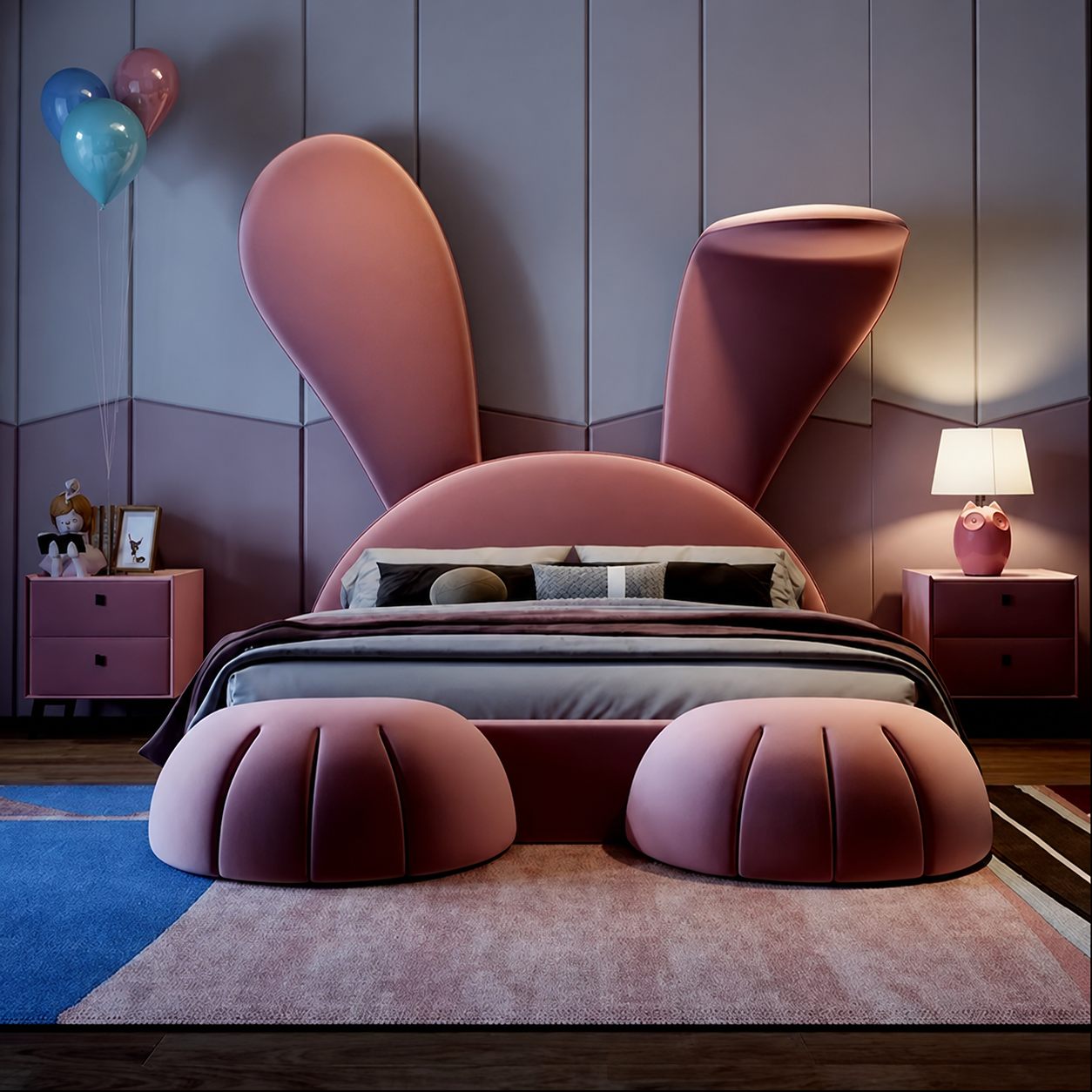
A few well-chosen pieces have more impact than a crowded set. The bed, study furniture, and storage should work as one practical group. When these three pieces fit the room and the child, the rest of the space feels balanced.
A Comfortable Bed
A children’s bed should provide stable support and easy access. Rounded upholstered edges soften the room. A simple wooden frame is easy to clean. In a small bedroom, drawers below the bed may replace a chest. This choice frees floor space and keeps the room open.
A Proper Desk and Chair
The desk should not block daylight or narrow the walkway. A compact desk with drawers can hold stationery. Deep drawer units may reduce legroom, so choose carefully. Pair the desk with a supportive chair rather than choosing only by appearance. Good posture during study helps concentration and comfort.
Storage Children Can Reach
Wardrobes should combine adult-level capacity with child-level access. Lower shelves or drawers can hold daily clothes. Upper areas store seasonal items. This layout supports tidying without placing everything on the floor. Children learn to manage their own belongings when they can reach what they need.
Juhaus Furniture Sourcing and Design Support
Juhaus, formerly VN CASA, is a mid-to-high-end furniture supplier and global buying agency based in Foshan. Its work covers whole-home furniture sourcing in minimalist, eclectic, and light-luxury styles. It offers direct manufacturer connections and end-to-end quality control.
Buyers can use one-to-one designer and stylist support. This help coordinates furniture scale, materials, finishes, and the wider interior. The service suits villas, large apartments, and multi-room projects. The child’s bedroom should feel individual while fitting the rest of the home. Experience across contemporary, minimalist, artistic, and luxury interiors also gives buyers useful reference points. These points help before discussing customization, inspection, and delivery.
استنتاج
Choosing furniture for a children’s room starts with daily life. Think about how the child sleeps, studies, plays, dresses, and puts things away. Measure first. Protect walking space. Anchor tall storage. Choose materials that can handle regular use. A flexible bed, a properly sized study area, and a balanced storage plan usually bring more value than a heavily themed set. Good children’s room furniture should work today. It should also leave room for changing needs and tastes as the child grows.
الأسئلة الشائعة
What furniture is needed for a child’s room?
A bed, wardrobe for storing clothes, place for storing toys and books and a desk when homework becomes part of everyday routine are musts. There may or may not be a other furniture depending on the available space and whether it is needed..
What should you look for in safe furniture for children?
Look for stability, smooth edges, sturdy joints, appropriate finishes, and proper assembly directions. Bolt down wardrobes, bookshelves, and drawer units. Place heavier things at the bottom. Safety always comes first.
Should one opt for wooden children’s furniture?
High-quality wooden furniture for children is very practical and easy to coordinate. The construction, surface finish, edges and fittings are equally important along with the wood itself.


