

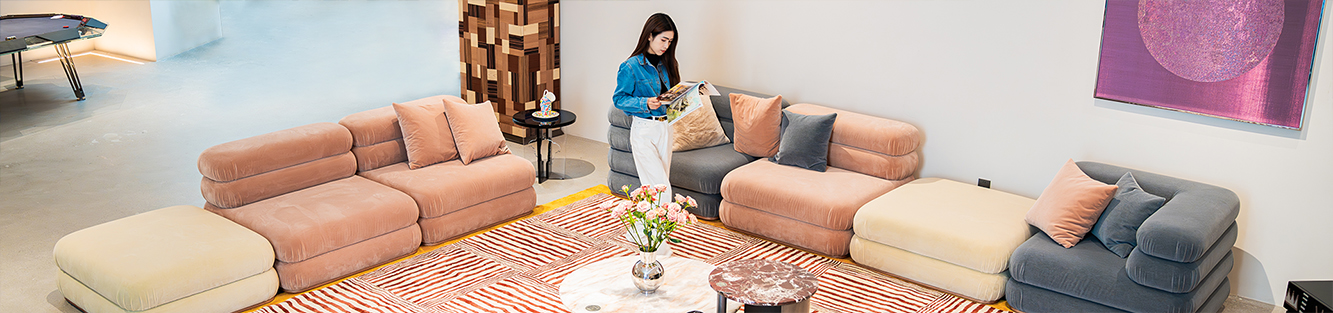
Floating vs Floor-Standing TV Cabinets for Luxury Interiors
A television cabinet affects how wide a room feels, where cables run, and how easily the layout can change. In a floating TV cabinet vs floor-standing TV cabinet decision, the better choice comes from the wall, equipment list, and daily routine—not style alone.
Floating TV Cabinet vs Floor-Standing TV Cabinet: Quick Verdict
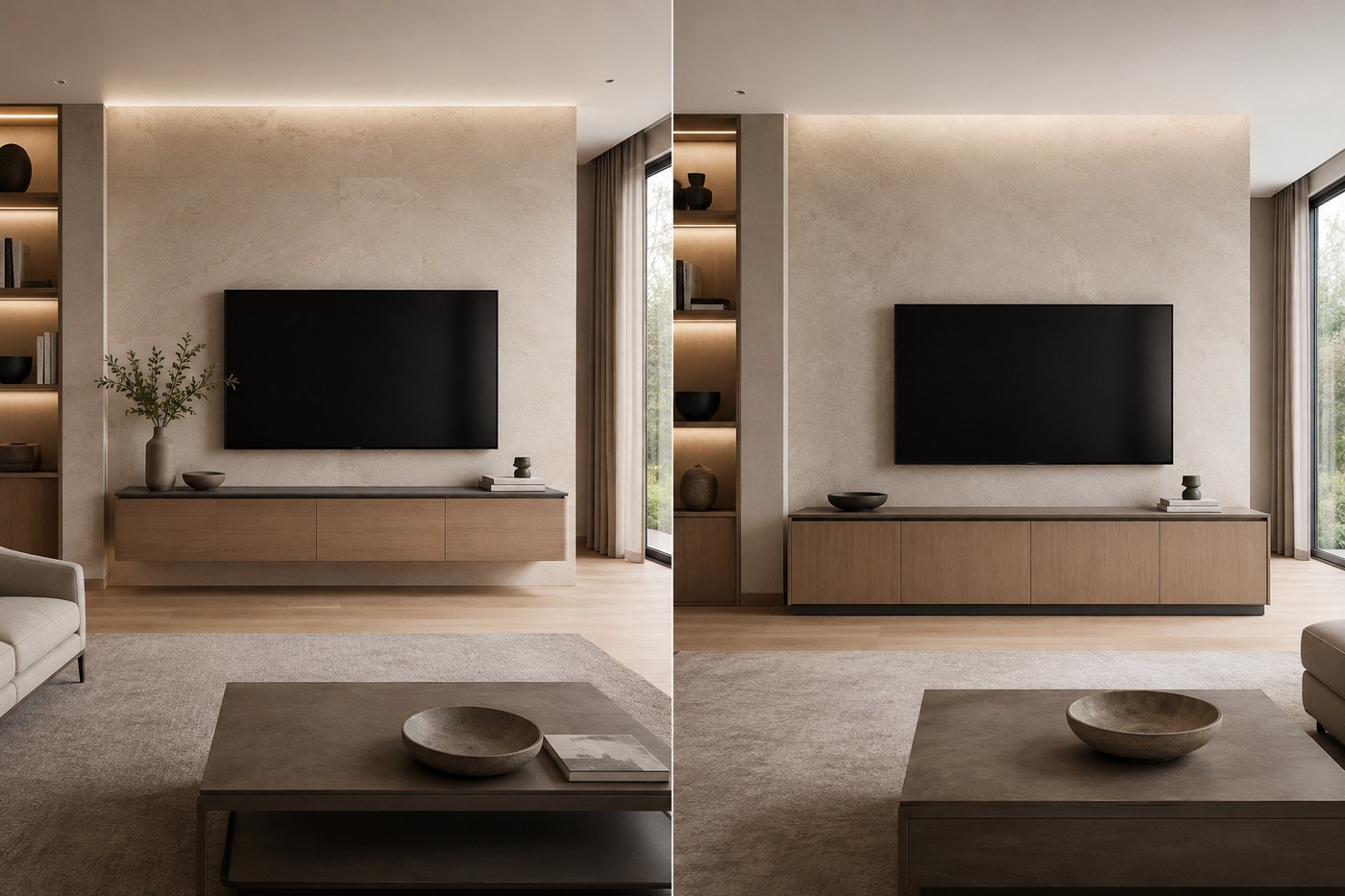
Choose a floating TV cabinet when open floor, crisp wall lines, and easy cleaning matter most, and the wall can carry the load. Choose a floor-standing TV cabinet when storage, relocation, or a strong furniture presence matters more. In luxury interiors, proportion and installation quality matter more than mounting type.
| Decision factor | Floating cabinet | Floor-standing cabinet |
| Visual effect | Light and architectural; exposes more flooring | Grounded and substantial |
| Хранение | Usually slimmer and more selective | Often deeper, with more drawers or shelves |
| Installation | Needs suitable wall structure and accurate fixing | Fast placement; anti-tip fixing may still be needed |
| Cleaning | Clear floor is easy to mop or vacuum | Plinths, legs, and rear gaps need attention |
| Future changes | Harder to move; wall repair may be needed | Easier to reposition or replace |
| Best fit | Compact rooms and custom TV walls | Large rooms, heavy equipment, rentals |
What Each Cabinet Type Means
The screen itself may be wall-mounted in either arrangement. The difference is how the storage cabinet is supported.
Floating TV Cabinet
A floating TV cabinet is fixed above the floor to masonry, studs, or reinforced backing. It may also be called a wall-mounted TV cabinet, floating TV unit, or floating media console. The open strip below creates a clean shadow line and keeps the floor visible.
Floor-Standing TV Cabinet
A floor-standing TV cabinet transfers its load to the floor through a plinth, legs, or full base. A freestanding TV cabinet can usually move without major wall repair, though a restraint may still be appropriate. A floor-standing TV unit can carry the screen or sit below a separately mounted television.
How the Two Options Were Compared
A useful comparison checks proportion, wall construction, loaded weight, device depth, ventilation, cable access, safety, and total project cost. A luxury TV cabinet should still allow a technician to reach a plug or replace a media box.
Visual Weight and Luxury Interior Style
Luxury comes from proportion, convincing materials, quiet joints, and details that continue cleanly across the wall.
When Floating Looks More Refined
A floating TV unit keeps the floor reading as one surface. The clear strip below reduces visual weight in a narrow room or open-plan apartment. Aligned door gaps can echo wall panels and concealed doors.
The effect depends on planning. A floating cabinet with a loose power strip underneath loses the calm look that justified mounting it. Finish samples should be viewed beside the floor, wall panel, and nearby luxury living room furniture rather than judged under showroom light alone.
When Floor-Standing Looks More Substantial
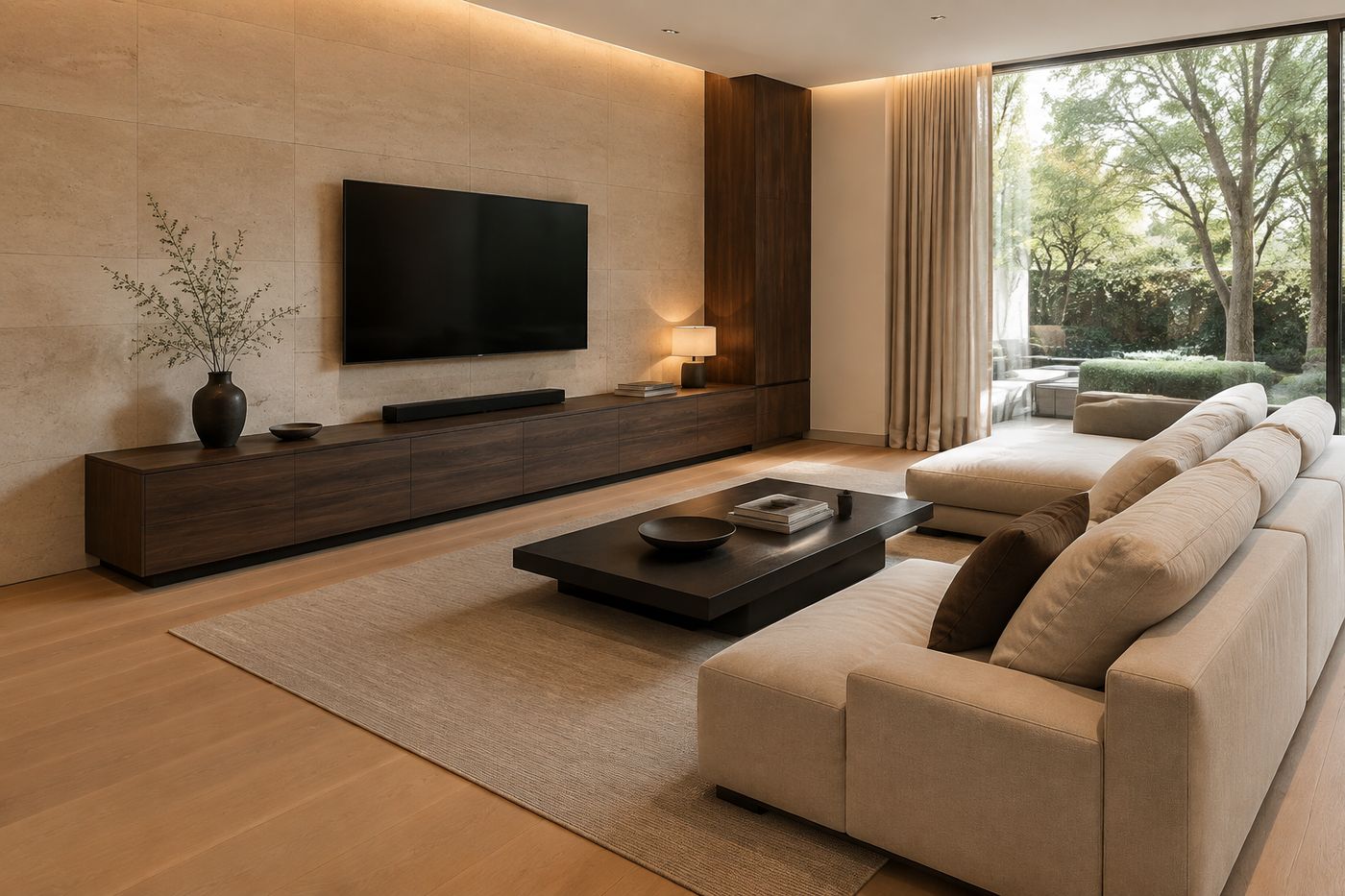
A floor-standing cabinet often works better on a broad wall that needs an anchor below a large screen. A stone top, deep timber grain, or recessed plinth gives it furniture-like presence. Thin legs feel lighter; a plinth looks solid and can block dust underneath.
Installation, Wall Structure, and Cable Planning
The floating option is less forgiving. Its load includes the carcass, surface material, drawers, devices, books, and anything added later. Fixings must suit the real wall, not a generic wall type on a sales page.
Structural Questions Before Ordering
Concrete and masonry need different anchors from stud partitions. A framed wall may need backing or blocking at the fixing height. Cladding adds layers between the bracket and structure. The installer should confirm the wall build-up, fasteners, fixing positions, and rated load. This is the practical meaning of checking wall strength for floating cabinet work.
A floor-standing piece avoids carrying its main load on the wall, but safety still matters. Wide drawers can shift weight forward. In homes with children, the cabinet and television should be secured where required, and an unmounted screen should sit on a sturdy, low base.
Cable Access and Ventilation
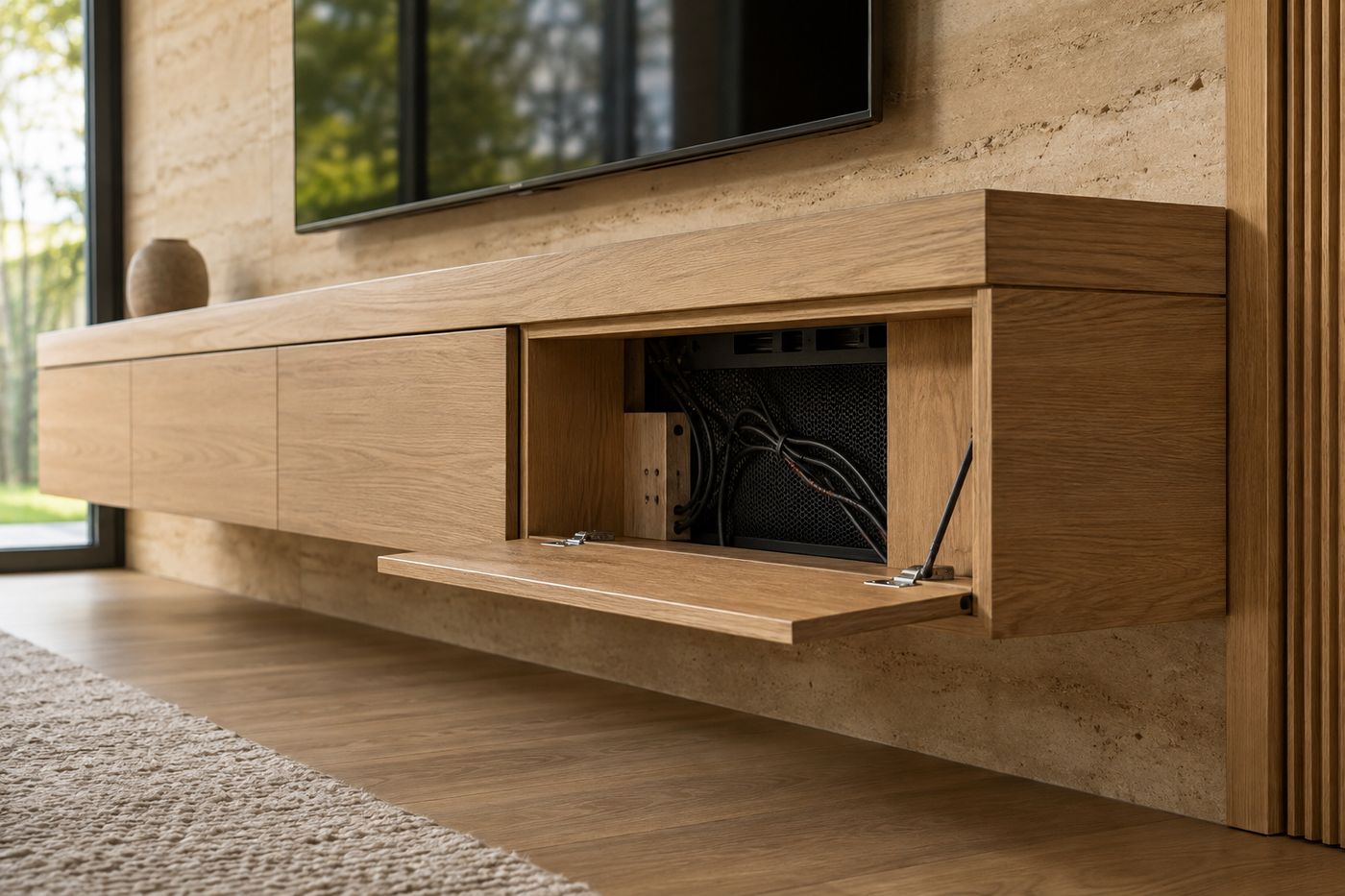
Good TV cabinet cable management starts with an equipment list. Measure the deepest receiver, router, game console, or control hub with its plugs connected; stiff cable bends need more room than the casing suggests.
Concealed cable management should include reachable outlets, ventilation, and a removable back or service panel. A sealed drawer is a poor place for heat-producing electronics. Planning these points through furniture customization and project services before production is easier than cutting finished panels on site.
Storage, Cleaning, and Everyday Use
A long custom TV cabinet can have several drawers while staying off the floor. Its real limits are often depth and wall load. Slim cabinets suit remotes and small media boxes; large receivers may favor a deeper floor-standing option.
TV console storage should match real objects. Open shelves aid access but expose dust. Closed doors quiet the wall, though remote signals and airflow need attention. For cleaning, the floor gap must admit the household’s mop or robot vacuum. An easy-to-clean TV unit can also be floor-standing when a tight recessed plinth keeps dust out.
TV Unit Dimensions That Affect the Decision
There is no universal set of TV unit dimensions. The ranges below are starting points, not production specifications.
| Measurement | Practical starting point | Why it matters |
| TV cabinet width | Screen width plus about 150–300 mm on each side | Supports the screen visually |
| TV cabinet depth | About 300–450 mm for many layouts | Must fit devices, plugs, doors, and airflow |
| Screen center | Near seated eye level, often around 1,050–1,100 mm from the floor | Links viewing comfort to the sofa |
| Floating floor gap | Often about 150–250 mm, checked against cleaning equipment | Controls shadow and cleaning access |
Before approving TV cabinet height, sit in the main viewing position and mark the screen center. A deep sofa lowers the eye line compared with an upright chair. Leave room for a soundbar without forcing the television upward.
Check TV cabinet depth against circulation, and measure the screen itself when deciding TV cabinet width. Two screens with the same advertised diagonal can have different outer widths or stand positions.
Record these measurements:
-
Finished wall width and skirting projection
-
Actual screen width, height, and mounting pattern
-
Seated eye level TV height from the main sofa
-
Deepest device with plugs and cable bends
-
Soundbar width and ventilation guidance
-
Drawer opening space and walking clearance
-
Floor gap needed for cleaning equipment
Best Choice by Room and Lifestyle
Room size matters, but storage habits and the likelihood of future changes often make the final call.
Small or Open-Plan Living Room
The best TV cabinet for a small living room is often a restrained floating design. This space-saving TV cabinet exposes more flooring and keeps the media zone light. A minimalist living room TV unit still needs an accessible place for the router, adapters, and controls.
Large or Formal Living Room
A TV cabinet for a large living room can carry more visual weight. A long floor-standing piece may balance a large screen and hold audio gear or books. Floating can also work as part of a built-in TV wall. Reviewing comparable completed furniture projects gives a better sense of scale than viewing an isolated cabinet.
Family Home, Rental, or Changing Layout
A family may value drawers for controllers and games. A renter may prefer a freestanding unit because it leaves fewer marks. A wall-mounted TV cabinet suits a stable layout, yet “mounted” does not automatically mean safe. Fixings and television restraint still need review.
Cost, Customization, and Long-Term Flexibility
Cabinet price tells only part of the story. Floating TV cabinet installation may add reinforcement, specialist fixings, electrical changes, panel removal, and touch-up work. A floor-standing piece may need fewer trades, but stone, complex fronts, premium hardware, or floor scribing can raise its cost.
A modern TV unit design benefits from custom work when it solves an off-center socket, deep receiver, column, or finish joint. Moving a floating media console can damage the wall. A freestanding piece moves more easily, though it may not fit the next room.
A Practical Decision Checklist
Use these final checks before ordering:
-
Pick floating when the wall is suitable, the layout is stable, and visible floor matters.
-
Pick floor-standing when storage is heavy, the wall is uncertain, or moves are likely.
-
Measure devices with cables attached and keep warm equipment ventilated.
-
Plan power, data, soundbar, lighting, and service access on one drawing.
-
Review fixing ratings, anti-tip needs, edges, and drawer movement.
-
Compare total installed cost, including wall and electrical work.
About JuHaus, Formerly VN CASA
JuHaus, formerly VN CASA, is a Foshan-based mid-to-high-end furniture supplier and whole-home furniture supplier for residential and hospitality projects. Its work covers space planning, finished furniture, custom cabinetry, material coordination, quality control, consolidated shipping, and installation support. For a TV wall, this joined-up scope can keep finishes, cabinet sizes, electrical positions, and site installation aligned.
Вывод
For compact, minimal interiors, a floating TV cabinet usually gives the cleaner result when structure, cables, airflow, and access are planned together. A floor-standing TV cabinet is stronger for heavy storage, easy changes, and rooms that need a grounded piece. The right TV cabinet for luxury living room design fits the wall, sightline, equipment, and routine with few compromises.
Часто задаваемые вопросы
These questions address the practical issues that commonly remain after the comparison.
What are the main floating TV cabinet pros and cons?
Benefits include visible floor, flexible mounting height, and easy cleaning. Drawbacks include structural demands, difficult relocation, and careful wiring. Check the wall and loaded weight first.
What are the main floor-standing TV cabinet pros and cons?
A floor-standing cabinet usually offers more storage and easier relocation. It can bring richer material weight to a luxury room. Trade-offs include a larger footprint, dust gaps, fixed height, and possible anti-tip restraint.
Is a floating TV cabinet better for a small living room?
Often, yes. Visible floor can make a compact room feel less blocked. Keep the cabinet shallow enough for circulation but deep enough for connected devices. Closed fronts help the media wall stay calm.
Can a wall-mounted TV cabinet be installed on drywall?
It may be possible when the fixing system connects to studs or purpose-built reinforcement and the full load has been checked. Fixing a heavy cabinet only to the face board can be unsafe. The installer should inspect the wall and specify the anchors or backing.


