

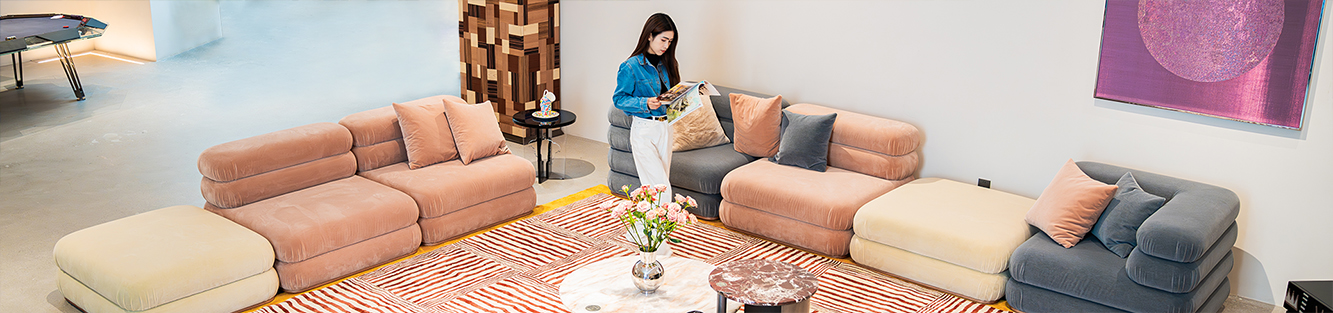
Sofa Seat Depth and Height Guide for a Comfortable Fit
A sofa may fit perfectly in a show space but turn out to be unsuitable for the actual living environment. It may lift off the floor, the lower back part of the spine does not touch the seat cushion or the front part of the seat pushes into one’s knees. All because there is a wrong relation between the height and the depth of the sofa seat.
The short answer is simple: start with the standard ranges, then check leg length, posture, cushion sink, and back support. This sofa size guide explains how to make that choice with a tape measure rather than a guess.
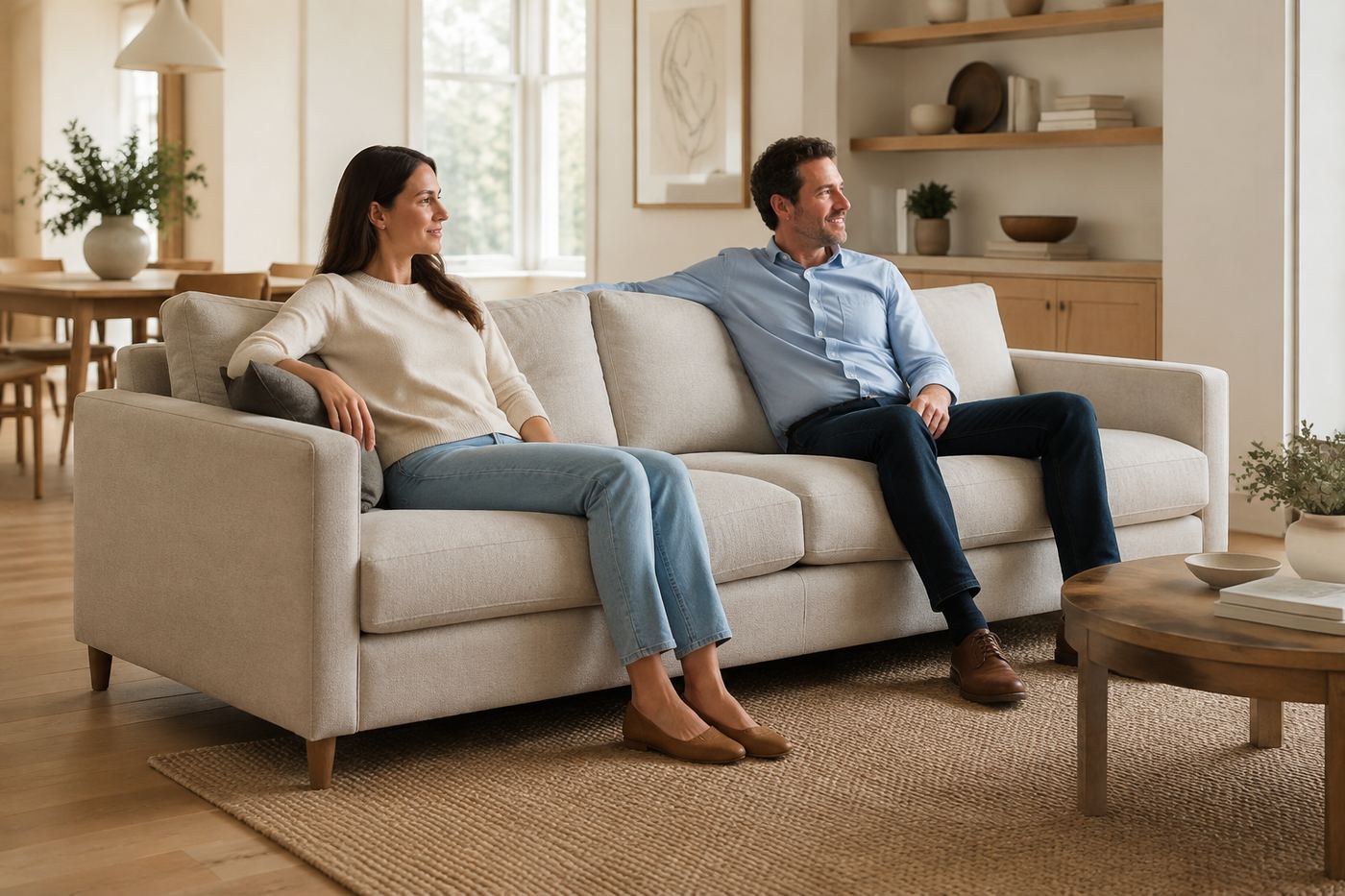
What Is the Best Sofa Seat Depth and Height?
For adults, a typical seat depth of a sofa of about 20-22 inches (51-56 cm) and a seat height of 17-19 inches (43-48 cm) would be a good starting point to choose the correct sofa dimensions. The proper seat depth will leave some space between your knees and the back of the sofa. The proper seat height allows you to place your feet flat on the floor. The cushion may lower the seated height up to one inch, so the printed sofa dimensions are just the beginning of the process.
| Measurement | Common range | Usually suits |
| Shallow seat depth | 18-20 in / 46-51 cm | Shorter users and upright sitting |
| Standard seat depth | 20-22 in / 51-56 cm | Mixed daily use |
| Deep seat depth | 23-25+ in / 58-64+ cm | Taller users and lounging |
| Standard seat height | 17-19 in / 43-48 cm | Many adults |
| Higher seat | 19-20 in / 48-51 cm | People who value easier standing |
Seat Depth vs Overall Sofa Depth: Read the Right Number
Furniture listings often place several measurements beside one another. That is where confusion starts. Seat depth vs overall depth is a comfort question compared with a room-planning question.
What sofa seat depth actually measures
What is sofa seat depth? Measure from the front edge of the seat cushion to the point where the back cushion meets the seat in its normal, fluffed position. This is the usable seat depth. A loose cushion can move forward; a thick back cushion can take away several inches. Ask for the measurement with the cushions installed, not just the bare frame.
What overall sofa depth tells you
Overall sofa depth runs from the furthest front point to the back of the frame. It belongs on a floor plan and a delivery checklist. It tells you whether a walkway remains open and whether the sofa can clear a lift, doorway, or stair turn. It does not tell you how much room the thighs receive. A sofa with generous couch dimensions may have a surprisingly short seat once the back cushions are in place.
Why matching sofa measurements can feel different
There may be two sofas that have the same sofa dimensions for their seats but fit very differently. The thickness of back cushions makes people lean forward. The softness of cushions determines how much a person will sink in a sitting position. Seat pitch that is tilted forward may make a seat look shorter, while a reclined back may give a feeling of deeper sitting.
How to Measure Your Ideal Sofa Seat Depth and Height
The useful measurements come from the person who uses the sofa, not from total body height alone. A dining chair, a tape measure, and a helper are enough.
How to measure sofa seat depth from your legs
For how to measure sofa seat depth, sit on a firm chair with the pelvis fully back and the feet planted. Keep the thighs level. Measure horizontally from the back of the buttocks to the crease behind the knee. This is the buttock-to-popliteal length. For upright sitting, choose a starting depth about 1-2 inches (2.5-5 cm) shorter than that measurement. The small knee gap prevents pressure at the cushion edge.
Do the same check in the posture used for television. If the seat will be used with an ottoman, record the upright number first; the legs can extend forward when relaxing, but a seat that is too deep is harder to correct.
How to measure sofa seat height from the floor
For how to measure sofa seat height, sit in the same position and measure from the floor to the crease behind the knee. This is the popliteal height. Compare the result with the loaded cushion height, not just the frame height. In a home where people sit barefoot, measure barefoot. For a formal room where shoes stay on, repeat the check in the usual footwear.
The basic test is feet flat on the floor, with no hard pressure behind the knees. A seat that passes this check usually gives a stable knee angle and makes standing less awkward.
Measure a sofa after the cushion settles
Ask the supplier how the sofa measurements were taken. Some factories measure a new cushion before compression. Sit on the cushion for a minute, then measure from the floor to the top of the seat. The difference is cushion compression. Also record the back cushion thickness, seat pitch, and back angle. Together, these details show the real sitting position better than a single catalog number.
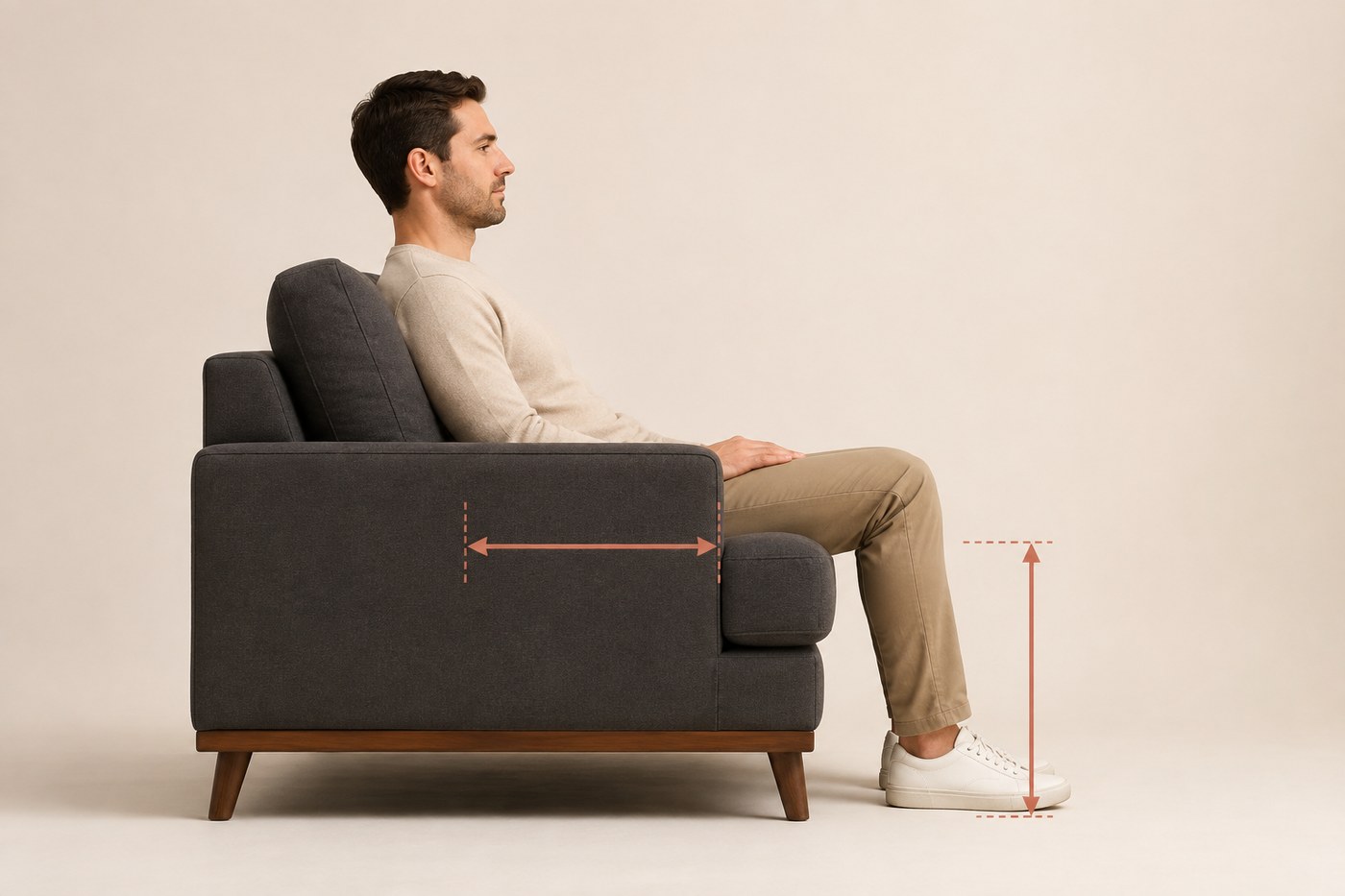
Sofa Seat Depth by Height and Body Proportion
The height charts can help in narrowing down the process, but it is the leg-to-torso ratio that makes the bigger difference. Two people can be 5 ft 7 in tall, but one person with long legs will require different assistance from the other one.
| User profile | Upright starting depth | Relaxed starting depth | Height check |
| Under 5 ft 4 in / 163 cm | 18-20 in / 46-51 cm | 20-22 in / 51-56 cm | Feet should stay planted |
| 5 ft 4 in-5 ft 10 in / 163-178 cm | 20-22 in / 51-56 cm | 22-24 in / 56-61 cm | Keep a light knee gap |
| Over 6 ft / 183 cm | 22-24 in / 56-61 cm | 24-26+ in / 61-66+ cm | Check full thigh support |
Best sofa seat depth for a short person
The search for the optimum sofa seat depth for short people will inevitably end up with a shallow seat sofa. This is logical as reading and conversation are the main activities in such a case. The initial range of sofa seat depth will be 18-20 inches (46-51 cm) with a comfortable back cushion. Otherwise, the lower part of the back will not touch the cushion even with proper numbers.
Sofa seat depth for average-height adults
For sofa seat depth for average height, 20-22 inches will be an acceptable starting point for a living room used by several people. Such a sofa will take care of conversation, reading, and watching TV without forcing the users to have an upright position or to lie back too far. Check the loaded seat depth due to thick back cushions.
Best sofa seat depth for a tall person
Optimal sofa seat depths for tall individuals invariably suggest a deep seat sofa, which is around 22 to 24 inches in width when seated in an upright position, and 24 to 26 inches wide when reclining. Thighs that are long require thigh support, but a deep sofa seat is required only when the back can be reached. The combination of a deep sofa seat and a hard lumbar pillow gives tall individuals room to stretch out.
Choose Sofa Dimensions by the Way You Sit
The proper dimensions of a reading chair do not equate to those of a media sofa. Determine what will happen on the sofa at 8 PM, not how it looks at noon.
Sofa for upright sitting, reading, or working
A sofa for upright sitting usually needs a shallow-to-standard depth, a moderate height, and a back that meets the lumbar area without a stack of loose pillows. Seat pitch should feel almost level. A compact lumbar support is more useful than extra depth when the sofa is used for books, laptops, or conversation.
Sofa for lounging and television
A sofa for lounging can be deeper, especially when paired with an ottoman. Start around 22-24 inches of usable depth, then check that the back cushion still supports the shoulders. A deep couch seat is not a promise of comfort; it can leave a shorter sitter bracing with the feet. The best test is to sit in the exact TV posture for several minutes.
Sofa for sitting cross legged or napping
A sofa for sitting cross legged needs open space across the cushion, not only extra length. An extra deep sofa seat or a chaise section gives room to change position. Removable back cushions can be useful because they allow the effective seat depth to be adjusted for upright use. Check the cushion edge for a firm ridge that could become uncomfortable during a nap.
Easy to get out of sofa for frequent standing
An easy to get out of sofa usually has a firmer cushion, moderate depth, and a loaded seat height near the user’s popliteal height. A sofa seat too low places the knees above the hips and asks for more effort at the first part of standing. A sofa seat too high lets the feet slide forward and can press behind the thighs. Armrests with a solid top can help with balance, but they should not replace correct height.
How Seat Height Affects Comfort and Mobility
What happens when a sofa seat is too low or too high?
When a sofa seat is too low, the pelvis rolls backward and the knees rise. Standing often starts with a rocking motion. When a sofa seat is too high, the feet may not carry equal weight; pressure gathers behind the knees and the body slides forward. The answer is not simply a taller or shorter frame. Check the cushion compression and the user’s actual knee angle.
Comfortable sofa seat height for elderly users
For comfortable sofa seat height for elderly users, many buyers begin around 18-20 inches (46-51 cm) loaded height, then adjust for leg length and mobility. A sofa for limited mobility should be tested with the person’s normal shoes and usual hand support. A firm edge and stable armrest can matter as much as an extra inch of height. This is furniture guidance, not medical advice.
Cushion softness changes effective seat height
Cushion firmness changes both height and depth. A soft cushion allows the hips to sink, lowering effective seat height and making the back feel farther away. A firm cushion keeps the sitting surface higher and more predictable. Ask whether the quoted size is measured before or after cushion compression. If the answer is unclear, request a side photo with a person seated and a ruler beside the cushion.
One Sofa for a Mixed-Height Family
A sofa for mixed height family works best when the base dimensions serve the person who sits most often. Choose a middle depth for shared seating, then fine-tune it with a loose lumbar pillow for the shorter user and an ottoman for the taller user. That small adjustment is usually less disruptive than choosing an extreme depth for everyone.
An adjustable sofa depth or modular sofa seat depth can solve a larger difference. One module can keep a more upright seat for daily conversation, while a chaise or deeper module handles weekend lounging. When ordering custom sofa dimensions, give the supplier the seated leg measurements and the main postures, not just the room plan.
How to Test Sofa Comfort Before You Buy
The ten-minute sofa sit test
A five-second sit rewards softness. A ten-minute sofa sit test reveals support.
-
Sit fully back with the normal back cushions in place.
-
Check that both feet stay on the floor without stretching forward.
-
Slide a hand behind each knee; there should be a small gap, not a hard edge.
-
Read, talk, and use the relaxed TV posture.
-
Stand up several times without pulling on a table.
That is how to test sofa comfort in a showroom. For buying a sofa online, ask for a sofa specification sheet showing usable seat depth, overall sofa depth, loaded seat height, back cushion thickness, filling, seat pitch, and side views. A missing seat-depth measurement deserves a follow-up before payment.
JuHaus publishes its furniture selection by room and style, but the important part of any remote order is the measurement conversation. The designer service can coordinate room plans, custom sofa dimensions, and related furniture sizes when a complete project is being sourced.
Common Sofa Dimension Mistakes to Avoid
-
Treating overall sofa depth as usable seat depth.
-
Choosing only by height and skipping the buttock-to-popliteal length.
-
Assuming a deep seat sofa is comfortable for every posture.
-
Ignoring back cushion thickness, cushion firmness, and cushion compression.
-
Testing for seconds instead of doing a proper sofa sit test.
-
Forgetting the person who stands most often, including an older family member.
-
Measuring the room but not the doorway, lift, or stair turn.
-
Accepting a wrong sofa seat depth because the fabric and color are right.
Quick Sofa Buying Guide Checklist
Before approving an order, confirm these points:
-
Seat depth with the back cushions installed.
-
Loaded seat height after normal compression.
-
Overall sofa depth and full couch dimensions for the room plan.
-
Back angle, seat pitch, cushion firmness, and filling.
-
Main user’s seated leg length and normal footwear.
-
Delivery route, doorway width, and installation access.
-
Return terms for stock pieces or written approval for custom work.
These checks make it easier to choose the right sofa dimensions before shipping. For a whole-home project, JuHaus also shares тематические исследования that show how living-room scale is coordinated with dining and storage areas. Company background and current contact information are available on the JuHaus home page.
About JuHaus
JuHaus, formerly VN CASA, is a Foshan-based mid-to-high-end furniture supplier and whole-home furnishing service provider. Its work can include interior planning, finished furniture and cabinetry sourcing, material coordination, production follow-up, quality checks, international shipping, and installation support for overseas residential projects. The published cases cover apartments, villas, and different interior styles. For a client ordering from another country, one coordinated team can keep measurements, finishes, delivery timing, and room scale in the same conversation.
Вывод
The ideal sofa seat depth and height is found by checking the body first, then the sitting style, then the cushion and back construction. Use standard ranges to narrow the search. Confirm feet flat on the floor, a light knee gap, steady lumbar support, and enough thigh support. A careful sofa sit test or a complete remote specification check is far more useful than a product photo alone.
Часто задаваемые вопросы
What is the standard sofa seat depth?
The standard sofa seat depth is usually 20-22 inches (51-56 cm). Shorter users who sit upright may prefer 18-20 inches, while taller users and loungers may need 23-26 inches. Compare the usable seat depth with the seated leg measurement and the thickness of the back cushions.
What is the standard sofa seat height?
The standard sofa seat height is commonly 17-19 inches (43-48 cm) before or after cushion compression, depending on the supplier’s method. The useful number is the loaded height: both feet should reach the floor, and the knees should not be sharply higher than the hips.
Is a 24-inch sofa seat too deep?
A 24-inch seat is not automatically too deep. It can suit a tall user, a sofa for lounging, or a person who sits cross legged. For a shorter person who wants upright lumbar support, it may feel excessive unless a firm back cushion or lumbar pillow reduces the effective seat depth.
What sofa seat depth is best for a short person?
The best sofa seat depth for a short person often starts around 18-20 inches (46-51 cm) for upright sitting. Check the knee gap and back contact rather than relying on height alone. A shallow seat sofa with a supportive back is usually easier to fit than a deep frame with many loose pillows.
What sofa seat depth is best for a tall person?
The best sofa seat depth for a tall person often starts at 22-24 inches (56-61 cm), with 24-26 inches for relaxed lounging. The key is full thigh support without losing contact with the back cushion. Measure the person first, then compare the loaded depth shown on the sofa specification sheet.


