

Best Wood Types for Furniture: A Practical Buying Guide
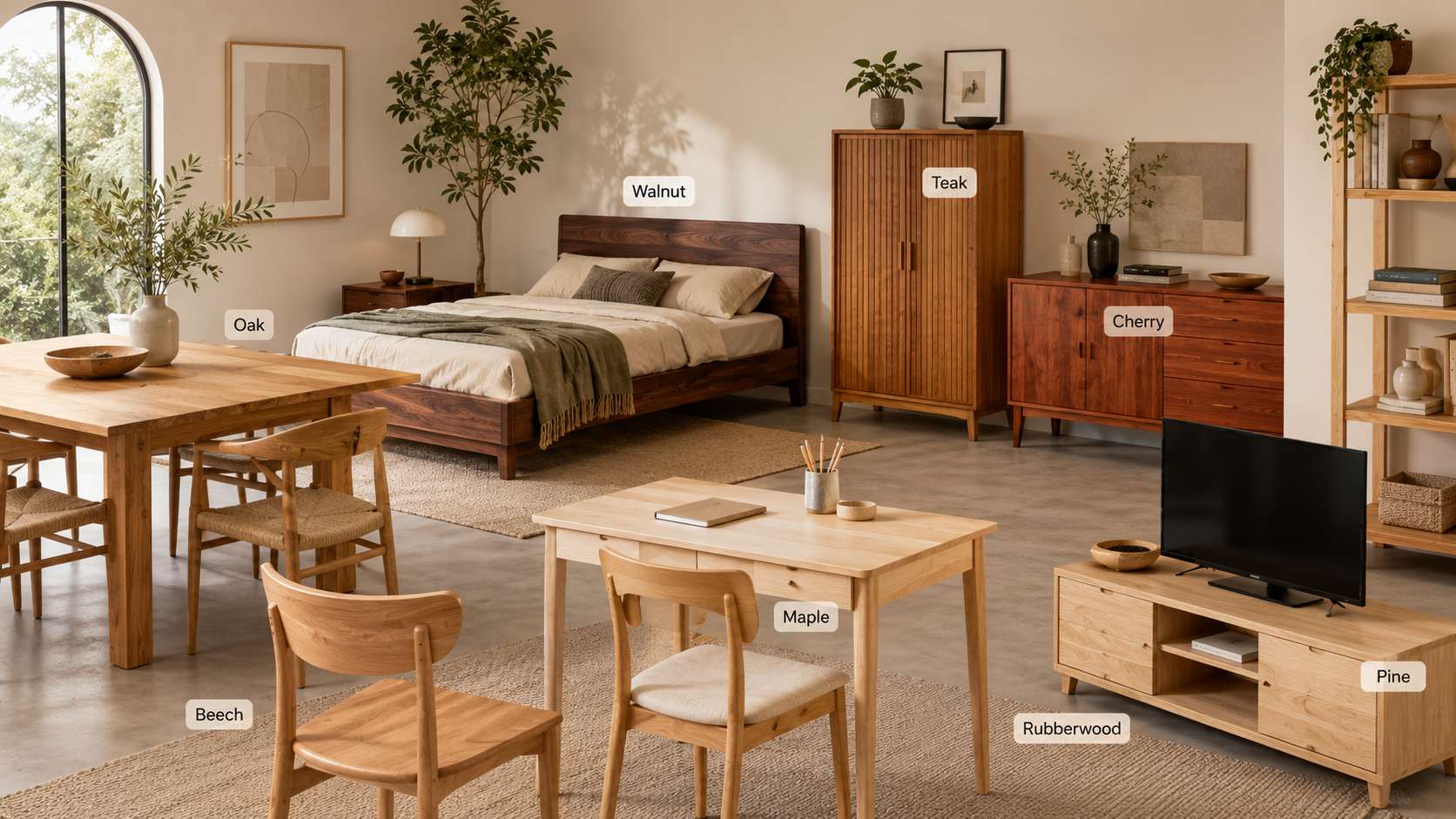
Wooden furniture can last for many years, but the term “wood” does not reveal much regarding the quality. There is great difference between a pine cupboard, walnut bed, and an oak dining table in terms of durability and functionality. This manual will help you understand what kinds of wood there are in furniture manufacturing and how to choose the right wood for your needs.
The Main Categories of Furniture Wood
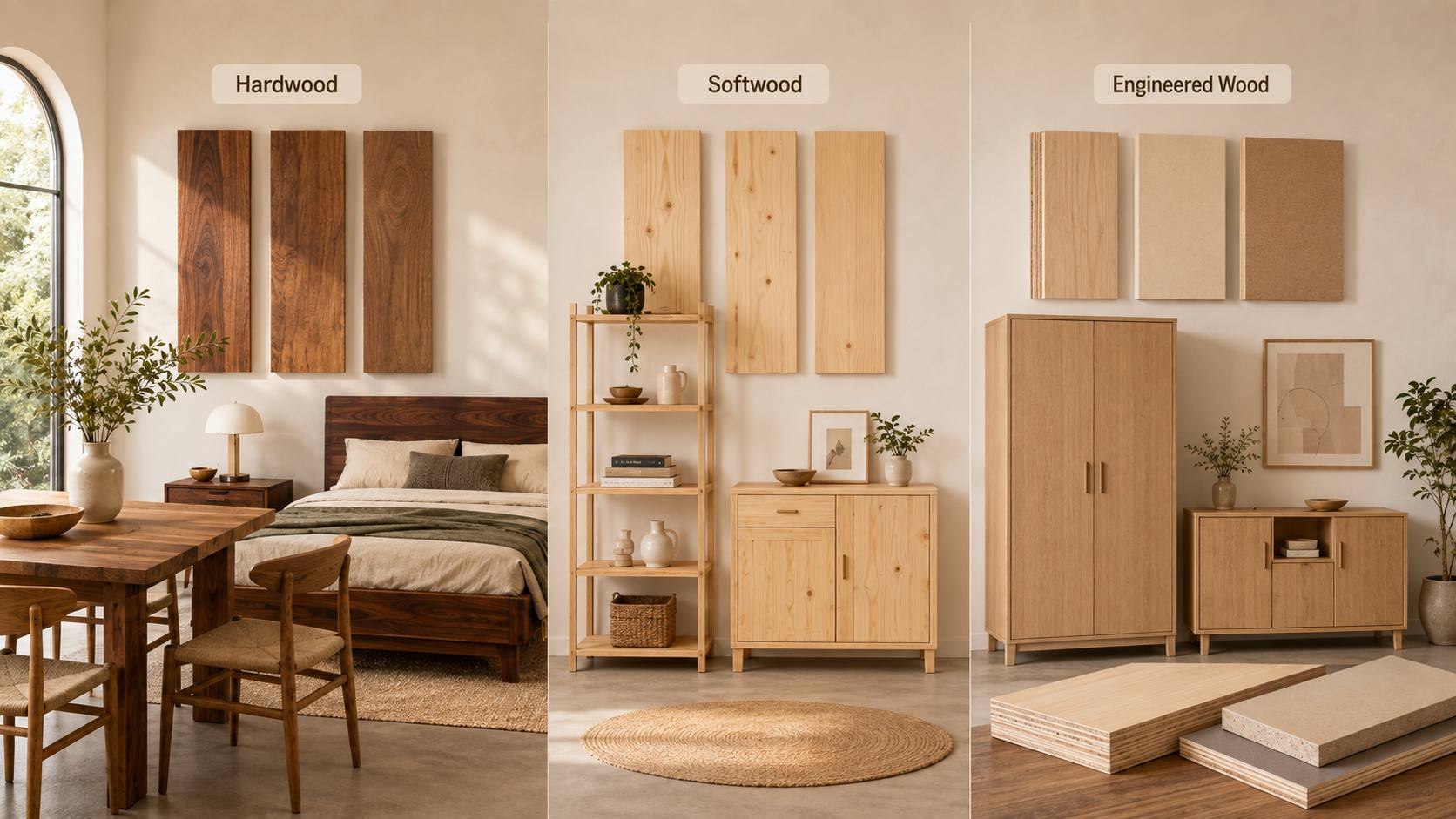
Before comparing species, it helps to separate natural wood from manufactured boards. Each group has a practical place in furniture production, and price is not the only difference.
Hardwood
Hardwoods come from trees with broad leaves. Oak, walnut, maple, cherry, beech, teak, and rubberwood are some examples of hardwoods. They offer resistance to wear quite well; that is why hardwood furniture finds its applications in the manufacture of dining tables, bed frames, cabinets, and desks. Hardness of wood has nothing to do with the name.
Softwood
Softwood is primarily derived from coniferous trees such as pines, cedars, firs, spruces, and larches. Softwood furniture is usually lighter and cheaper, although its exposed surfaces are easily susceptible to dents and scratches.
Engineered Wood
Engineered wood furniture can be made using plywood, medium density fiberboard, particle board, or veneer on top of a stable base. The uses of these materials include the manufacturing of cabinets using plywood; painting of furniture using medium density fiberboard, while veneer offers the appearance of real wood.
|
Материал |
Main strengths |
Common uses |
Check before buying |
|
Hardwood |
Strong, repairable, natural grain |
Tables, beds, chairs, cabinets |
Species, finish, moisture level |
|
Softwood |
Light, workable, cost-friendly |
Shelves, frames, casual furniture |
Dents, knots, coating |
|
Engineered wood |
Stable and efficient |
Wardrobes, cabinets, storage |
Core density, sealed edges |
Common Types of Wood Used in Furniture
Different uses of furniture require the selection of different woods. For example, a dining table requires sturdy surface material, a bed needs stability, and a cupboard might prioritize color and grain over these properties.
Oak: Durable and Easy to Place
Oak wood furniture has grain and looks substantial. It works well for dining tables, beds, sideboards, and cabinets which will be in constant use. Oak can be minimalist, rustic, contemporary, or traditional based on how it has been finished.
For a family dining area, oak is practical. Plates, serving dishes, laptops, and homework create repeated wear, so a hard surface and repairable coating help. Rounded corners can also make movement safer.
Walnut: Rich Color for Refined Interiors
Walnut wood furniture is liked because of the rich dark brown colors and the wonderful grain. This wood is often used in making beds, desks, coffee tables, consoles, and cabinet fronts. Walnut wood provides a good appearance in the current wooden furniture without being overly decorated.
Ask whether a piece is solid walnut, walnut veneer, or a combination. Each can perform well when construction is clearly stated.
Teak: Suitable for Humid Conditions
Teak wood furniture has natural oil properties to resist any humidity and moisture that might occur. This type of furniture is used outdoors; however, it is suitable for indoor table, cabinet, and accent furniture. Teak’s golden brown shade always darkens with time.
Teak wood still requires maintenance; outdoor furniture needs regular cleaning and drainage, whereas indoor furniture requires protection from any standing water and excessive heat.
Cherry and Maple: Smooth and Versatile
Cherry wood furniture has a smooth texture and a warm shade that gets darker with time. The furniture is suitable for dining room, bedroom, and cabinet furniture.
Maple wood furniture is lighter and often more even in appearance. Its hard surface suits desks, drawers, and dining pieces. Both woods can change noticeably after staining, so a physical finish sample is more reliable than a screen image.
Beech and Rubberwood: Practical Modern Choices
Beech wood furniture has a fine texture, good bending properties, and a clean appearance. It is often used for chairs, tables, frames, and modern storage pieces.
Properly dried rubberwood furniture can provide a smooth surface and reliable indoor performance at moderate cost. It is common in dining furniture, cabinets, and beds. Poor processing may cause movement in humid conditions.
Pine: Affordable and Full of Character
Мебель made from pine wood is light in weight, easy to paint and easily available. It has an informal look due to the presence of knots and color variations which makes it ideal for use in casual bedrooms and shelving. Pine wood has a tendency to dent easily compared to other hardwoods.
Matching Wood to the Room
Wood selection is easier when daily behavior comes before appearance. A compact apartment, large villa, and rental property place different demands on furniture.
Living Room Furniture
The wooden frame for the sofa should be sturdy, joined together well, and moisture-resistant. Useful materials to build such a frame include oak, beech, rubber wood, and larch. Cable entry, ventilation, edge protection, and hardware should be taken into account when purchasing coffee tables and wooden TV cabinets.
The small TV cabinet would fit into the minimalistic interior of the living room, whereas the big cabinet could be used in a family room along with media equipment, books, and other accessories. The wood finish should go well with the floor but not blend in perfectly. Slight contrast often creates a more natural result.
Dining Room Furniture
A wooden dining table needs enough clearance for chairs and movement. About 90 cm of passage space works in many layouts, though room shape may require changes. Oak, maple, walnut, teak, beech, and finished rubberwood can all perform well. The coating should resist common spills and allow straightforward maintenance.
Table size should reflect real routines. A household that regularly hosts six people needs more surface area than one that mainly serves two. Rounded or softened corners can help in narrow dining zones, while an extendable design may suit homes where larger gatherings happen only a few times a year.
Bedroom Furniture
The advantages of solid wood bedroom furniture include soundless joints, firm slats, smooth edges, and space for dusting. Oak and walnut are best for lasting statement pieces, beech and rubberwood strike the right balance between cost and performance, while pine is used when lightness is desired.
Bed, bedside table, wardrobe, and bench furniture should have the same visual language. They don’t necessarily need to consist of the same wood, but the wood direction, temperature of the finish, hardware, and proportions should feel coherent.
Before ordering, check the following:
- Exact wood species and construction method
- Solid wood, veneer, and engineered-board locations
- Finish samples in daylight and warm indoor light
- Dimensions against doors, lifts, sockets, and walkways
- Humidity, shipping, installation, and after-sales support
Solid Wood Furniture vs. Engineered Wood Furniture
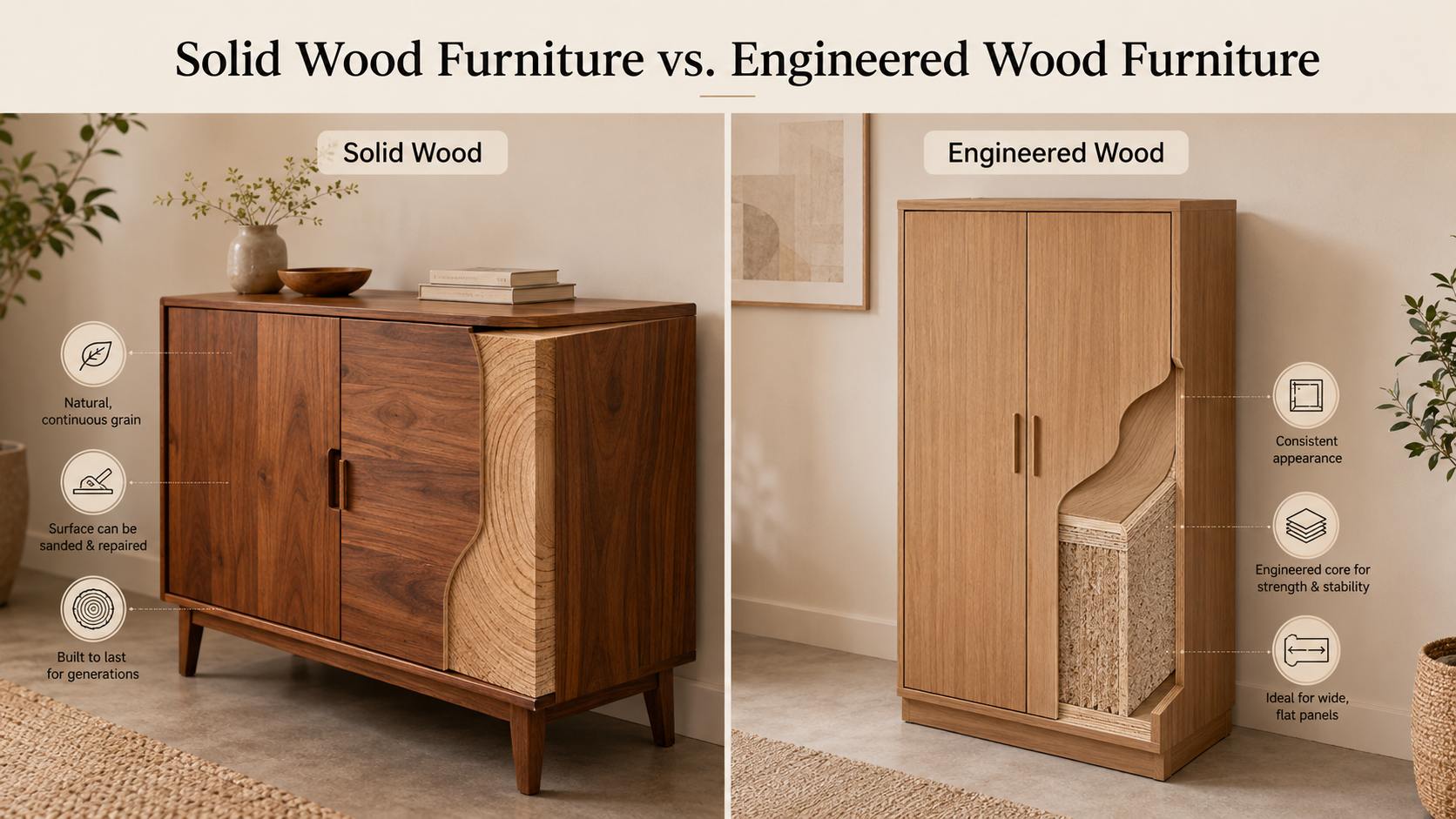
Neither material wins in every setting. Solid wood furniture offers natural variation, repair potential, and a substantial feel. Engineered wood furniture can provide stable wide panels, consistent painted finishes, and efficient storage construction.
|
Фактор |
Solid wood furniture |
Engineered wood furniture |
|
Appearance |
Natural grain and variation |
Consistent surface or veneer |
|
Repair |
Often refinishable |
Depends on surface layer |
|
Wide panels |
May expand and contract |
Often more stable |
|
Typical use |
Tables, beds, visible frames |
Wardrobes, boxes, painted fronts |
Strong furniture often uses each material according to function. A solid wood frame, furniture-grade plywood panel, and quality veneer can form a durable piece when joints, finishes, and hardware are well executed.
The construction method deserves as much attention as the surface material. Loose joints, weak drawer runners, thin edge treatment, or poorly fitted hardware can shorten the life of furniture made from an otherwise suitable wood.
How to Judge Wooden Furniture Quality
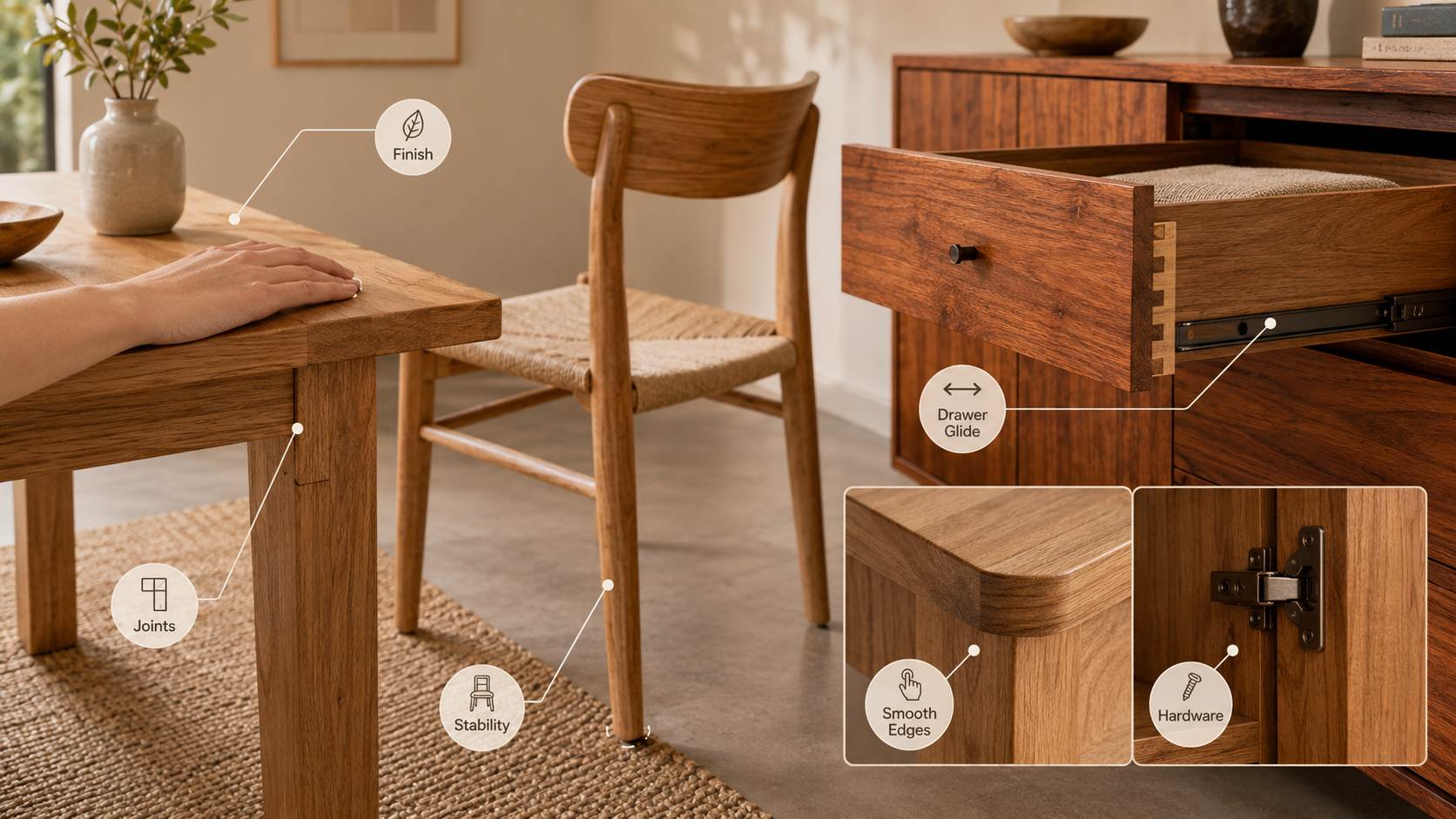
A polished surface can hide weak construction, so inspection should go beyond color and grain. Open doors and drawers several times. Sit on chairs and sofas. Check whether the piece rocks on a level floor.
The gaps between doors and drawers, sharp edges, unstable legs, and unsteady joints of wooden furniture need to be avoided. The upholstery needs to feature appropriate specifications with regard to the design of the inner framework, the type of seat support used, and the fabric used.
For custom wooden furniture, technical drawings should show overall dimensions, material locations, finishes, hardware, and installation conditions. This reduces misunderstandings before production and helps different rooms maintain a consistent style.
About Juhaus
Juhaus, formerly VN CASA, is a mid to high-end furniture provider that operates in Foshan. The company’s services include supplying whole-home furniture and materials used for the construction of the private residences, apartments, villas, and residential projects. The company’s offerings include furniture of the living room, dining room, and master bedrooms, in the minimalistic, eclectic and light-luxury styles.
The services include designing, sourcing, production, coordination, inspection, logistics and installation. Designers and stylists can use floor plans, dimensions of the rooms, types of materials and lifestyle needs in order to help the clients to plan furniture for all the rooms.
In some cases such project-oriented approach may prove itself useful since the property may require delivery of sofas, dining room furniture, beds, cabinets, and decoration materials, proportioned and finished in the same way.
Вывод
No one wood is the best for making furniture. The oak is durable; the walnut gives color; the teak wood resists moisture; the cherry wood gives warmth; the maple gives hard and clean surface; beech and rubber woods combine performance with price, and pine wood is suitable for light furniture.
Choosing the right wood for furniture is dependent on the combination of the characteristics of wood, construction, finishing, and maintenance of the material with actual room conditions. The buyers must also take into consideration the use of the furniture, local climate, size of furniture, maintenance requirements, and credibility of the supplier.
Часто задаваемые вопросы
What are the types of wood used in making wooden furniture?
The types of wood used in furniture include oak, walnut, teak, cherry, maple, beech, rubberwood, and pine. Solid wood may be combined with plywood, MDF, and veneer.
Is hardwood furniture better than softwood furniture?
Hardwood furniture is generally chosen for its durability, whereas softwood furniture is lighter and cheaper. It is easier to carve from softwood and may not last as long as hardwood furniture.
Which is better–solid wood furniture or engineered wood furniture?
Solid wood furniture is often easier to refinish and has natural grain variation. Engineered wood can be more stable for large panels and painted cabinetry. Board grade, adhesives, edge sealing, and hardware affect performance.


