

How to Choose a Dining Room Sideboard Size Storage and Finish
The sideboard is the last item seen when the dining room works well, but the first item cursed when it doesn’t. Imagine a guest backing up away from the table just as the cabinet is being opened for clean plates. The moment of collision will reveal whether the cabinet is too deep, incorrectly located, or equipped with inappropriate doors.
How to Choose a Dining Room Sideboard Size Storage and Finish
Start With the Job the Sideboard Must Do
Arrange everything first without glancing at your cabinets. Serving dish is likely to be the culprit: while it fits on a shelf, it cannot fit through the door opening. Note the width and height of the platter, including handles. Then take a look at the vase, the large pitcher and the stack of dinner plates. Generally speaking, sideboards are classified as closed storage systems; they are designed to conceal your belongings rather than serve as wall decor.
Separate those into two piles. Daily napkins and utensils go near the top so they are easily accessible with one hand. Holiday dishware can go to the lower shelf provided you can reach there comfortably. Determine the purpose of the top of the sideboard – whether it is supposed to serve drinks or display items. You will need an empty spot for a tray and two glasses.
Choose Doors and Drawers by Contents
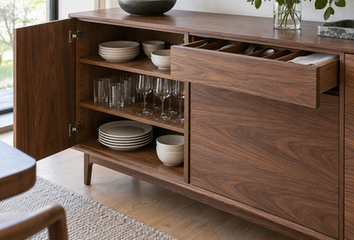
A shallow cutlery drawer and a cabinet for large bowls usually make a better pair than a row of identical doors. Ask for the drawer’s clear inside width and the runner’s load rating at full extension. A deep drawer packed with plates can be unpleasantly heavy. For the cabinet, request an internal elevation. It should show where shelf pegs can actually go, since ‘adjustable’ says little about the usable heights.
Measure the Wall and the Working Space
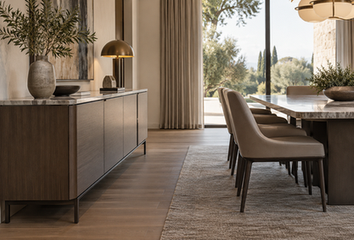
Draw the room as it is used at dinner. Measure from the skirting board. Add sockets, pipes and the swing of the nearby door. Then pull the dining chairs out to occupied positions. Tape the proposed sideboard depth on the floor and carry a plate past someone seated. The strip of floor left in a vacant room is a misleading measure of circulation.
A narrow cupboard looks good on a slim wall but see if the largest plate fits in without being put diagonally. In the case of the cabinet being built in, check the height of the floor from both sides as even a slight difference may make all the doors in a line look crooked. In case of any appliances being installed in it, mark the points where the wires and heat are coming out.
Check Delivery Before Approving the Size
The route from the delivery vehicle deserves a second sketch. Note the packed length, width and weight, then check the lift, stair turn and doorway. A long sideboard may fit its wall beautifully yet fail at the landing. If it arrives in sections, show the joint positions on the approved drawing and confirm how the finish will align after assembly.
Match the Finish to Daily Use
ALT: Clear route between a dining table and sideboard
Compare the intended finish against the dining table and floor/wall surfaces in the same house. The sideboard does not necessarily have to be matched perfectly to the dining table. Pick one element from it and use it somewhere else while also allowing for contrast. It is especially helpful in an open-concept design where everything matches looks too staged.
Compare Finishes as a Whole-Home Decision
Place the proposed sideboard sample beside flooring, wall color and table samples rather than judging it alone. If several rooms are being furnished at once, keep a finish schedule with supplier, material, color reference and approval date. JuHaus’s whole-home furniture collection shows the dining categories that can be coordinated with a custom storage piece.
Review the Practical Details on a Specification Sheet
One drawing should answer four questions: How big is the cabinet? What fits inside? What opens into the room? Which finishes and hardware have been approved? Mark the platter and pitcher on the internal elevation, and draw a pulled-out chair beside the door arc. JuHaus’s service plan includes measured layouts and a detailed furniture list. For this piece, those documents should agree with the final quotation, down to the sample code and runner type.
|
Decision |
What to confirm |
Why it matters |
|---|---|---|
|
Overall size |
Wall, chair and walking clearance |
Prevents a cramped dining route |
|
Internal layout |
Largest stored item and shelf adjustment |
Makes capacity genuinely usable |
|
Doors and drawers |
Swing, runner load and handle reach |
Supports daily access |
|
Finish |
Approved physical sample and care method |
Reduces mismatch and upkeep surprises |
For overseas orders, record the approved sample and drawing version with the purchase order. Confirm who checks dimensions and surface quality before packing. JuHaus describes its designer service plan, which includes floor-plan review, dimension confirmation and a furniture list; these steps are especially useful for a custom cabinet tied to a larger room scheme.
ALT: Open sideboard showing shelves and cutlery storage
Avoid Common Sideboard Mistakes
Beware the impressive overall width. Thick dividers can turn a long cabinet into several compartments that each miss the platter by a few centimeters. Ask for clear widths. Then check the door and drawer operation against the approved layout, not just a photo of closed fronts. A inspection guide should list dimensions, function and finish among the checks before shipment. Each of those can be confirmed for this specific cabinet.
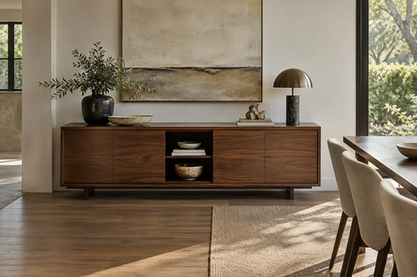
Leave some of the top empty. A water jug, a plate waiting to be cleared, or a tray of glasses needs somewhere to land. Art and a lamp can still sit above or on the cabinet, but mark the working area first. If a wall light needs power, locate it before the sideboard is installed. A cable draped across the new finish is a poor substitute for planning.
When a Custom Sideboard Makes Sense
Customization is valuable when the wall has an unusual length, the room needs a specific storage mix, or the sideboard must share finishes with other cabinetry. It is less useful when a standard cabinet already fits the plan and contents. For a broader explanation of how cabinetry can be coordinated across rooms, see JuHaus’s custom furniture overview.
Keep the decision in one place. An email with the width, a chat with the shelf layout and a separate photograph of the finish are easy to mix up. Put the dimensions, internal arrangement, hardware and approved sample on one dated drawing. Check it against the measured room and delivery route, then attach that version to the order. The quoted price is meaningful only when it describes that version.
Build a Buying Checklist That Survives a Quote
Quotation by quotation, line by line. Is the price inclusive of the top, hinges, runners, packaging, transportation, and installation? Are the carcass materials identical for both the offers? In JuHaus’s offer, it is stated that photos and videos will be provided by their inspector before shipment. Demand to see it open with a fully opened drawer and tape measures for the total width. Picture from the front is a good way to know nothing about what storage unit you are buying.
Raised cabinet should remain stable with the maximum weight drawer open. Wall-mounted cabinet requires the wall capable of carrying the load, appropriate fixings, and installer mentioned by name. Ask all these questions when you still can change the drawing. Nice design of the floating sideboard is not able to reveal structure behind the plaster.
Test the Design With Everyday Actions
Do a quick run-through of the taped outline. One member of the group takes out the chair, another opens the cabinet, and one carries the large platter. Watch out for the handle getting in the way of the clothes or the door stopping the path of movement. If it does happen, change either the depth or door style. A more costly finish will not make up for the missing space.
Include all the details about care and maintenance when ordering. Find out how the surface is protected from hot plates, how to clean a spilled wine and if the hinges could be replaced. The finish code must be saved as well. Should the door get damaged during transport, ‘brown walnut’ would not give enough information to match it.
结论
A well-chosen dining room sideboard should combine practical storage, comfortable movement and a finish that complements the overall home design. Before making a decision, consider the room layout, stored items, door and drawer functions, delivery requirements and material samples. Careful planning helps avoid common problems such as poor circulation, insufficient storage or mismatched finishes. Whether selecting a ready-made piece or investing in a custom design, the most successful sideboard is one that meets everyday needs while enhancing the dining space. With accurate measurements and thoughtful choices, a sideboard can remain both functional and stylish for years.
About JuHaus
At JuHaus, we specialize in high-quality furniture that supports various style while ensuring comfort and durability. Whether you’re looking for unique statement pieces or timeless furniture with character, our extensive range will cater to your needs. Explore our official website to find the perfect additions to your home.
JuHaus’s furniture quality inspection guide lists dimensions, function, appearance and packing among pre-shipment checks. Those categories are useful for a sideboard too, provided the inspector compares it with the final approved drawing.
常见问题
How deep should a dining room sideboard be?
Measure the largest serving piece and its route through the door opening. Then test the space left when diners pull out their chairs. The right depth satisfies both checks.
Should the sideboard be similar to the dining table?
Absolutely not. You repeat one feature like color or design and then you use contrasting pieces. Check physical samples under the room lighting before saying yes.
Should I choose drawers or cabinets for my dining storage?
Choose shallow drawers for cutlery and linen and adjustable shelving cabinets for bulky items. Make sure you know the weight of items to put in the drawers.


