

Sofa Cleaning and Maintenance for Longer-Lasting Comfort
A sofa picks up dust, body oils, crumbs, pet hair, and spills almost every single day. A lot of this dirt sinks deep into the seams and gaps between cushions. It happens before the top surface even starts to look messy. Good sofa cleaning and maintenance focuses more on steady habits that match the material. It is less about using strong washes. These steps help keep the sofa looking good and feeling comfortable for a much longer time.
Check the Upholstery Type First
Anyone who wants to learn how to clean a sofa needs to start with the care label. Or they should look up the maker’s instructions. Different materials react in their own ways. Think about cotton-linen mixes, brushed cloth, velvet, microfiber, real leather, and other mixed fabrics. They all handle water, solvents, steam, and heat differently.
What the Couch Cleaning Codes Mean
Many sofas have standard cleaning codes on their labels. Here is what they usually mean:
|
Code |
Typical Meaning |
Suitable First Step |
|
W |
Water-based products may be used |
Apply a small amount with a damp cloth |
|
S |
Solvent cleaner only |
Use an approved upholstery solvent |
|
W/S |
Water- or solvent-based care may be suitable |
Match the method to the stain |
|
X |
No liquid cleaner |
Vacuum or use professional sofa cleaning |
Always test any cleaner on a hidden spot. Try the underside of a cushion or the back panel. Let it dry fully. Then look for any fading, color changes, stiffness, rings, or shifts in the fabric feel. Skipping this test causes many common sofa cleaning problems.
Follow a Weekly Sofa Care Routine
Regular care pulls out grit before it digs into the fabric. This makes deeper cleaning at home much easier later on.
Vacuum, Rotate, and Reshape Cushions
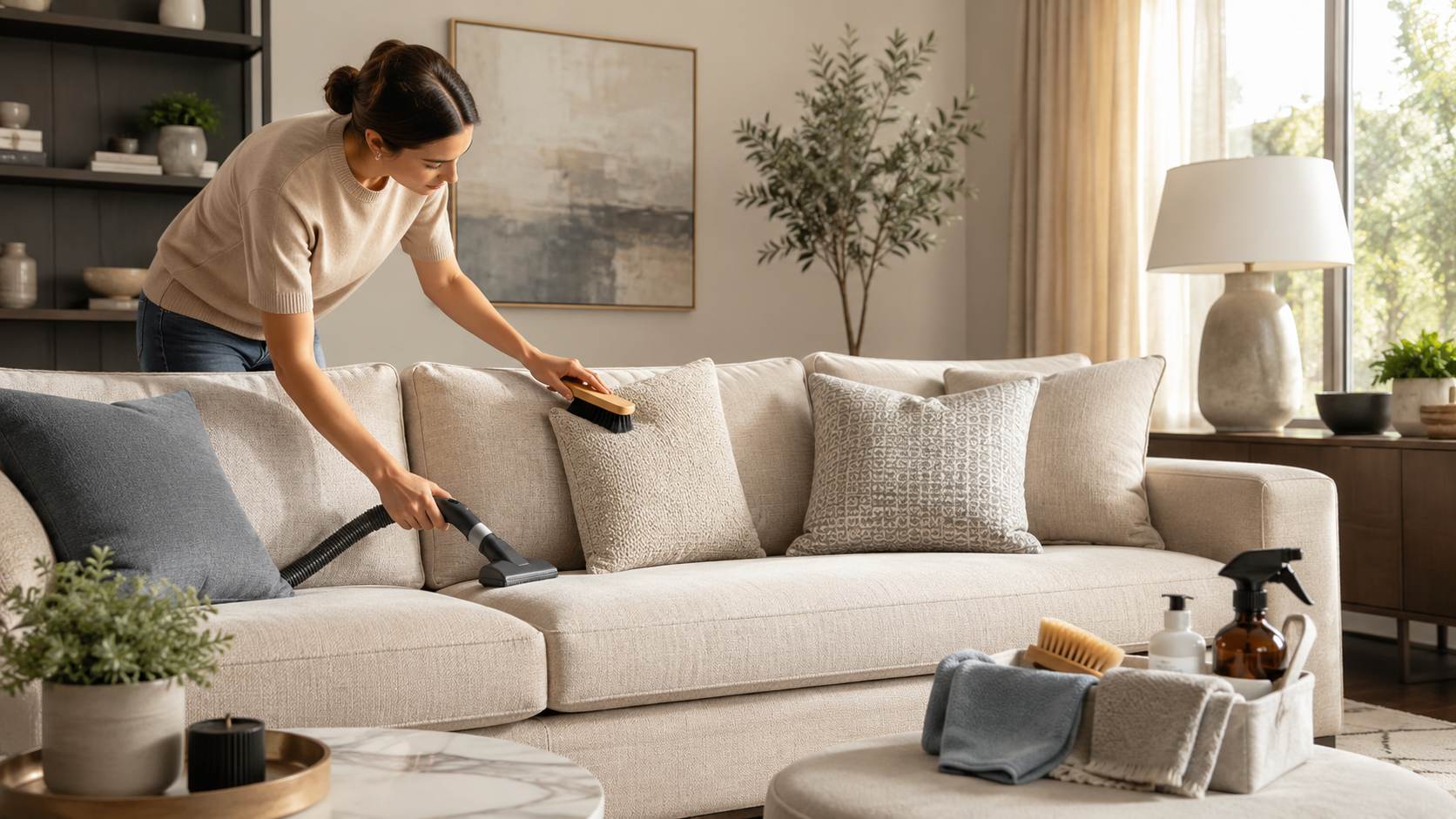
Use a clean upholstery brush attachment. Go over the back, arms, piping, seat area, and all cushion gaps. For pet hair on sofa fabric, first gather loose strands with a rubber brush or glove. Then vacuum.
A quick 10-minute routine works well. It includes several easy tasks. Start by vacuuming from top to bottom. Next, check inside seams and gaps. Wipe any exposed wood or metal parts separately. Flip reversible cushions. Finally, fluff up feather or fiber-filled seats.
Cleaning sofa cushions also involves handling wear patterns. Rotate them every few weeks. This way, one spot does not get softer or flatter than the rest. It is one of the simplest ways to make a sofa last longer.
Fabric Sofa Cleaning Step by Step

Always begin fabric sofa cleaning with dry methods. Adding liquid too soon can turn surface dust into a smeared gray mark.
Blot Spills First and Use Little Moisture
Vacuum the whole sofa. Include the platform under removable cushions. For a fresh spill, press a clean white cloth firmly against the spot. Do not rub. Rubbing spreads the liquid and damages the yarns.
When you remove sofa stains, work from the outer edge toward the center. Put the approved cleaner on the cloth first. Never pour it straight onto the fabric. A coffee spill on light cotton-linen might need several light passes. One big wet application can soak the foam or feathers inside. It often leaves a visible ring.
Deep Clean Only When the Material Allows It
Before you try a deep clean on a couch, check if the covers come off and wash safely. A zipper does not always mean machine washing works. The cover might shrink, twist, or end up a different shade than the fixed parts.
If extraction or steam tools are okay, avoid too many wet passes. Keep cushions separate. Open windows and run a fan. In humid weather, the inside filling can stay damp even after the surface feels dry. Sitting on it too soon presses the wet padding and can trap bad smells.
Leather Sofa Care Without Cracking

Leather sofa care depends on gentle dusting, fast spill handling, and protection from heat. Natural leather dries out quicker near sunny windows, heaters, or fireplaces.
Clean Lightly and Condition Sparingly
Vacuum the seams with a soft tool. Then wipe the surface with a clean cloth. Use a leather cleaner only after you test it in a hidden area. Blot drink spills right away. Let the spot dry on its own. Avoid bleach, strong cleaners, rough sponges, and random home mixes. They can harm the finish.
A thin layer of proper conditioner keeps finished leather soft. Buff off any extra. Close blinds on strong sunny afternoons. Leave space around heat sources. These steps show how to protect a sofa without hiding it under covers.
Remove Stains and Odors by Cause
The best treatment depends on the exact stain and the sofa material. No homemade mix works safely on every type.
|
Problem |
First Response |
Avoid |
|
Water or coffee |
Blot right away and check the care code |
Flooding the area |
|
Grease or food oil |
Lift solids and absorb surface oil |
Hot water and hard scrubbing |
|
Pet accident |
Blot, then use an approved enzyme cleaner if allowed |
Masking odor with fragrance |
|
Ink or dye |
Stop the spread and seek material-specific advice |
Unchecked alcohol or solvent |
|
Stale smell |
Vacuum, air the room, and wash permitted covers |
Saturating the filling |
To lift grease stains from sofa upholstery, scoop solid food with a spoon. Press an absorbent cloth on the mark. Then follow the approved method. For water stains on sofa fabric, do not focus only on the dark edge. When instructions allow, treat the whole area lightly and evenly. This helps stop new rings from forming.
Sofa odor removal starts under the surface. Vacuum cushion gaps thoroughly. Clean removable covers when the label says yes. Improve air flow in the room. Dry every treated spot completely. Strong smells from urine, mildew, smoke, or old food often need help from professional upholstery cleaners.
Match Care to the Sofa’s Construction
Upholstery is just one piece of the sofa. A cotton-linen cover over down and soft foam needs different handling than leather over firmer foam. Skirted sofas collect extra dust near the floor. Brushed fabrics show pressure marks if scrubbed too hard. Metal bases pick up fingerprints easily. Timber frames should stay away from wet cleaners.
For mixed-material sofas, follow these tips. Vacuum fabric areas and seams with a soft attachment. Use only leather-safe products on real leather sections. Dust wood parts with a dry or slightly damp cloth. Wipe metal pieces separately and dry them immediately.
When you pick new seating, ask questions. Find out about the fabric, cushion filling, frame material, removable covers, and cleaning advice. Homes with kids or pets often do better with easy-care materials. Formal rooms may prefer nice textures or the natural look of leather.
How Often Should You Clean Your Sofa?
How much you use the sofa matters more than any fixed schedule. Vacuum busy seats every week. Clean under cushions once a month. Rotate cushions every few weeks. Treat spills the moment they happen. A deeper fabric sofa cleaning might happen every six to twelve months. It depends on pets, children, food, humidity, and daily use.
It would be better to call upon professional couch cleaners when dealing with solvent cleaners only, sensitive surfaces, unsealed leather, heavy stains, smoke smell, or any instances where water has entered the stuffing of the couch. Lack of an instruction label would be a sufficient reason.
About Juhaus
Juhaus, formerly VN CASA, serves as a mid-to-high-end furniture supplier and global buying agency. It is based in Foshan. The company offers sofas, dining sets, beds, and full-home collections. These pieces fit minimalist, eclectic, and light-luxury styles.
Clients can combine furniture sourcing with personal design help and styling support. They also get supplier coordination and quality checks. Experience with large apartments, tall-ceiling homes, and villa projects helps with smart choices. Buyers discuss sofa sizes, upholstery options, cushion builds, finishes, and overall room coordination. For new residential projects, people can look at finished spaces. They talk about materials, dimensions, and sourcing needs before they place an order.
结论
Solid sofa cleaning and maintenance comes down to four key habits. Read the label carefully. Vacuum on a regular basis. Blot spills fast. Use products made exactly for the material you have. Rotating cushions, drying everything fully, and shielding the sofa from direct sun or heat all help. These actions keep the shape and finish looking fresh. When you feel unsure about the material or a tough stain, test small spots and ask professionals. It is safer than guessing with strong cleaners.
常见问题
Is It Possible to Clean All Fabric Sofas Using Steam?
No, because steam could damage fabrics that are treated only with solvents, delicate piling, colorfast materials, or slow-to-dry filling materials. The sofa should always be tested for steam cleaning.
How Often Should a Pet Owner Clean Their Sofa?
Those areas which are used often have to be vacuumed at least once in a week. Clean any spillages and mess right away. The rate of cleaning depends upon how much shedding takes place, the smell, the type of fabric, and whether the animals sleep on the couch or not.
How Can You Keep the Smell Off Your Sofa?
Vacuuming, washing of removable coverings if possible, immediate cleaning of spills and providing proper air circulation must be done regularly. All your efforts to get rid of smell will be fruitless if moisture remains inside the sofa cushions..


