

Which Furniture Materials Are Truly Healthy?
家具 comes into contact with our body throughout the day. Furniture is used for sleeping, sitting, eating, and working. Therefore, healthy materials of furniture must include minimum chemical emissions, durability, proper finishing, and adequate product information.
“Natural” is not enough. Solid wood may carry a high-emission coating, while certified engineered wood can meet strict formaldehyde limits. A cotton linen sofa may still contain strong adhesives or poorly documented foam. The healthiest furniture material is a complete system of frame, panel, glue, finish, fabric, filling, and hardware.
What Makes Furniture Material Healthy?
A solid wood frame for the bed, using mechanical fittings, would possibly need less glue than a laminated one. Safety issues in the dining table are stability of the legs, smooth edges, and an easy-to-clean surface.
Four Points Worth Checking
- Base material: solid wood, plywood, MDF, particleboard, metal, stone, glass, bamboo, or rattan.
- Added chemicals: adhesives, stains, lacquers, flame treatments, waterproofing, and stain-resistant finishes.
- Emission evidence: current VOC and formaldehyde reports rather than broad “green” claims.
- Durability: joints, moisture resistance, replaceable covers, repair access, and edge sealing.
Furniture off-gassing is often most noticeable when products are new, though the rate changes with material, finish, temperature, humidity, and ventilation. A sharp smell calls for investigation, but no smell does not prove that a product is low emitting.
The Healthiest Furniture Materials Compared
Each material has strengths and trade-offs. The safest furniture materials are those matched to the room, construction method, climate, and expected use.
|
材料 |
Main strength |
Point to verify |
Suitable uses |
|
Solid wood |
Durable and repairable |
Glue, stain, topcoat |
Beds, tables, frames |
|
Engineered wood |
Stable for broad panels |
Formaldehyde grade, edges |
Wardrobes, storage |
|
Bamboo and rattan |
Light and tactile |
Drying, anti-mold treatment |
Doors, backs, accents |
|
Metal, glass, stone |
Easy to clean |
Coatings, resin, edges |
Tables, legs, consoles |
|
Upholstery |
Comfort and softness |
Fabric, foam, filling |
Sofas, beds, chairs |
Solid Wood Furniture
Solid wood furniture is often chosen for healthy home furniture because it can reduce resin-bonded panels in a room. It also ages well and can usually be repaired. Yet species alone does not decide indoor air quality. Ask whether the surface uses a water-based finish, hard-wax oil, low-VOC lacquer, or another tested coating.
A solid wood bed frame with mechanical joints may need less adhesive than a heavily laminated design. For dining furniture, stable legs, rounded edges, and a cleanable top are practical safety points.
Is Certified Engineered Wood Safe?
Engineered wood is not automatically unsafe. Plywood, MDF, and particleboard remain stable across cabinet doors, headboards, and storage panels. The main questions are the binder and measured formaldehyde release.
For products entering the United States, buyers should check whether applicable panels and finished goods are TSCA Title VI compliant. The supplier should identify the panel type, emission grade, producer, test date, and use location. “No-added-formaldehyde” describes an adhesive system; it does not prove zero emissions.
Exposed cut edges may release more odor and absorb moisture. Low-formaldehyde furniture should combine compliant panels with clean lamination and finished edges.
Bamboo and Natural Rattan Furniture
Furniture made out of bamboo and natural rattan is warm without being heavy, unlike that made from timber paneling. The weaving pattern of rattan allows for air to go through it, making it ideal for chair backings, cabinet doors, headboards, and screens.
Unsuitable drying of the plant matter can result in warping or molding on transport by sea or in humid rooms. Ask about moisture control, anti-mold treatment, gluing, dyeing, and finishing.
Metal, Glass, and Stone
Metal furniture, glass furniture, and stone furniture generally use fewer wood-based adhesives, but they still need review. Powder coating should resist flaking. Glass needs polished edges and secure fittings. Manufactured stone may contain resin, so its composition should be stated.
For safe dining table materials, stability is critical. A heavy top on a narrow base can tip even when the surface is low emitting. Rounded corners and well-positioned supports help in homes with children or tight walkways.
Healthy Sofa and Upholstery Materials
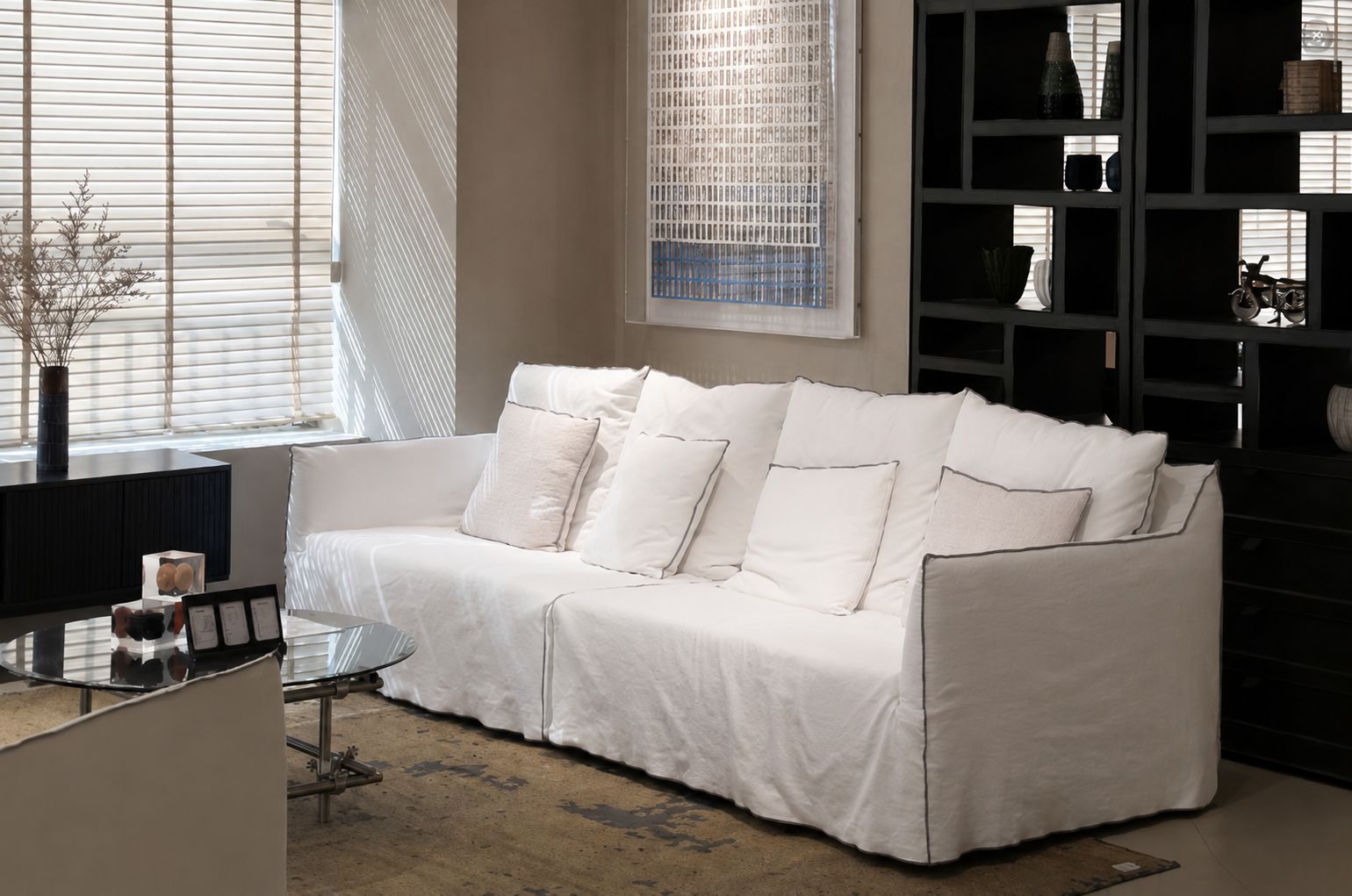
A sofa is a layered product, so the visible fabric tells only part of the story. Healthy sofa materials cover the frame, suspension, foam, filling, glue, lining, and outer textile.
What to Ask About a Sofa
Start with the frame. Kiln-dried solid wood or well-made plywood can provide stable support. Check whether the cotton linen sofa fabric has been tested for harmful substances. OEKO-TEX certified fabric addresses textile testing, while GOTS certified fabric applies to qualifying organic textile processing. Neither label alone certifies the complete sofa.
High-resilience foam can support the lower back, but density, emissions, flame treatments, and adhesive use should be stated. Down or fiber changes the feel, not the foam beneath it. Removable covers extend service life.
Best Furniture Materials by Room
Material priorities change by room. The best furniture materials for bedrooms differ from those for a busy dining area.
卧室
Nontoxic bedroom furniture should have low-emitting surfaces due to the prolonged time during which the space can remain closed up. A wooden bed frame, an upholstered headboard that was tested, and wardrobe panels with sealant make an ideal choice. The newly arrived furniture needs airing out first.
客厅
In case of the living room, consider healthy sofas, washable fabrics, solid foam, and sturdy frames. In cases where there are pets and young children in the home, then removable tight weave material might be more appropriate than fragile material that requires regular chemical washing.
餐厅
The furniture for the dining room would face risks like staining, heat, shock, and cleaning. There can be many materials available that can be used including wood, stone, glass, metal, and rattan. But the best choice would have low-VOC furniture finishes, stain-resistant qualities, tight joints, round edges, and ample leg space.
A Practical Buying Checklist
Before approving a sample or placing a whole-house order, ask:
- Which parts are solid wood, veneer, plywood, MDF, or particleboard?
- What adhesive and finish are used?
- Are panel emission reports current and traceable?
- Does a certificate cover the complete item or only the fabric?
- Are foam density and test details available?
- How are timber, bamboo, and rattan dried?
- Can materials be changed for a bedroom or humid climate?
- Who inspects finished goods before shipment?
These questions are more useful than asking whether furniture is simply “eco-friendly.” Formaldehyde-free furniture, GREENGUARD Gold certified furniture, and similar claims should be matched to a valid scope and product record. GREENGUARD certification, for example, addresses chemical emissions rather than every aspect of furniture construction.
About Juhaus
Juhaus, formerly VN CASA, is is a mid to upscale furniture provider and an international purchasing company located in Foshan. The range offered comprises living room, dining, and master bedroom designs in minimalist, eclectic, and light luxury designs. These services include planning from floor plans, procurement, production monitoring, quality control, logistics, and installation.
The company partners with a wide range of manufacturing plants for villas, large residences, high ceiling buildings, and commercial interior settings. One-on-one designer and stylist assistance ensures consistency in size, finishes, and material selections. Specifications for health-oriented procurement need to have panel grade details, finish options, textile testing, foaming standards, and inspection points prior to production.
结论
Real healthy furniture cannot be characterized by only one beautiful term. Wood, engineered wood, bamboo, rattan, metal, glass, stone, or upholstery can be used in a healthy home provided that the emissions, finishing materials, glues, moisture control, and construction are examined. The right choice combines safety of the material with comfort, durability, room environment, and transparency of information.
常见问题
What Is the Healthiest Furniture Material?
Solid wood with a verified low-emission finish is often a strong choice, but there is no universal winner. A healthy product must also use suitable glue, hardware, fabric, foam, and surface treatment.
Is MDF Furniture Safe?
MDF can be suitable when it meets the required formaldehyde standard, has sealed edges, and comes with traceable test records. Its use in a cabinet panel is different from broad exposed areas beside a bed.
How Can Buyers Choose Low-VOC Furniture?
Ask for material lists, coating details, panel reports, textile tests, foam information, and certificate scope. Ventilate newly delivered furniture and avoid relying on smell alone.


